
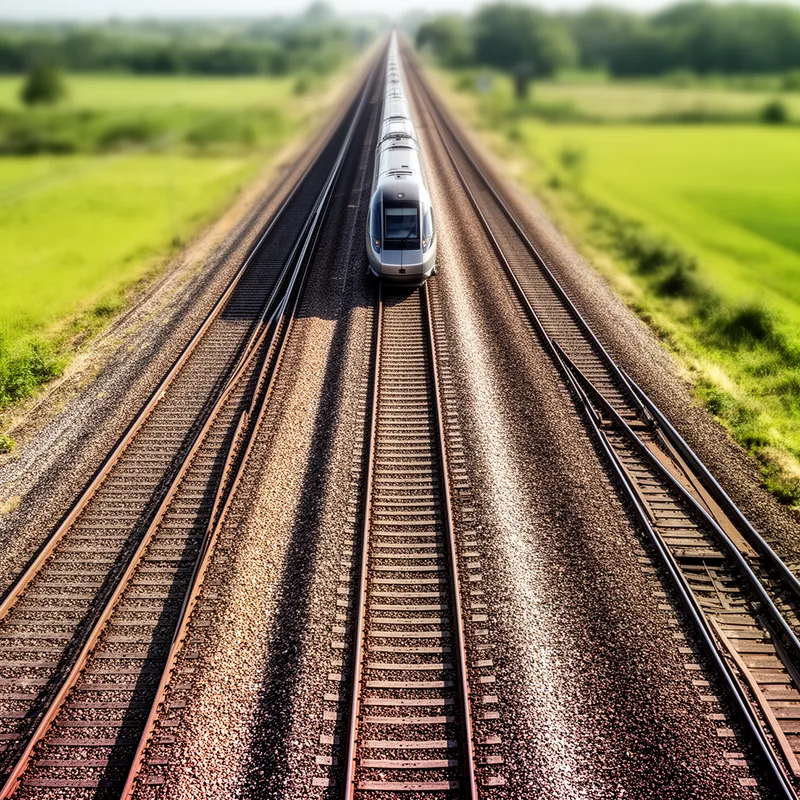
main line
 7
3.2
7
3.2

- noun
- /meɪn laɪn/
- Passengers waited at the station for the next train on the main line to arrive.
Examples
-
The mistake directed a freight train off the main line and onto a siding, where it struck a stationary train.
Academic text (2007) -
Once an hour, there is a stopover by the maglevs on the Knoxville-Chattanooga run on the main line.
Fiction book (1999) -
That goes to the main line which goes to the power station.
-
Tom got his train to Doncaster, managed to switch points so he could use the main line, north and south.
-
There are six rail road goods yards and three main-line stations.
-
Far out on the main line, the breeze is right to hear the Amtrak, "The Merchants' special," hurtle past for Philly.
Fiction book (1996) -
Special trains with appropriately equipped rolling stock, one or two baggage cars, and passenger coaches traveled along the main line and major branches, showing farmers practical aspects of beef-cattle raising, dairy farming, and sheep, goat, and swine production.
Academic text (2007) -
The train travels along the main line that connects major cities across the country.
-
The main line was shut down due to maintenance, causing delays for all commuters.
Synonyms
 16
4.2
16
4.2
A main route like a train line or a large water pipe
A main train route that connects important towns and cities
Main railway line that carries most trains between big cities
How Important


Surface Forms
Morphology
The meaning 'principal route' is directly and transparently derived from combining 'main' (primary, chief) with 'line' (a route or railway line); the compound is compositional and follows a straightforward noun-noun pattern. This sense is cross-linguistically common and predictable, so a B1 learner who knows both constituents will readily infer the MWE's meaning.
Etymology
Main line may come from early train travel. The main means most important and the line is the track, so the picture of one big track that carries most trains explains why it means 'the main route'.