
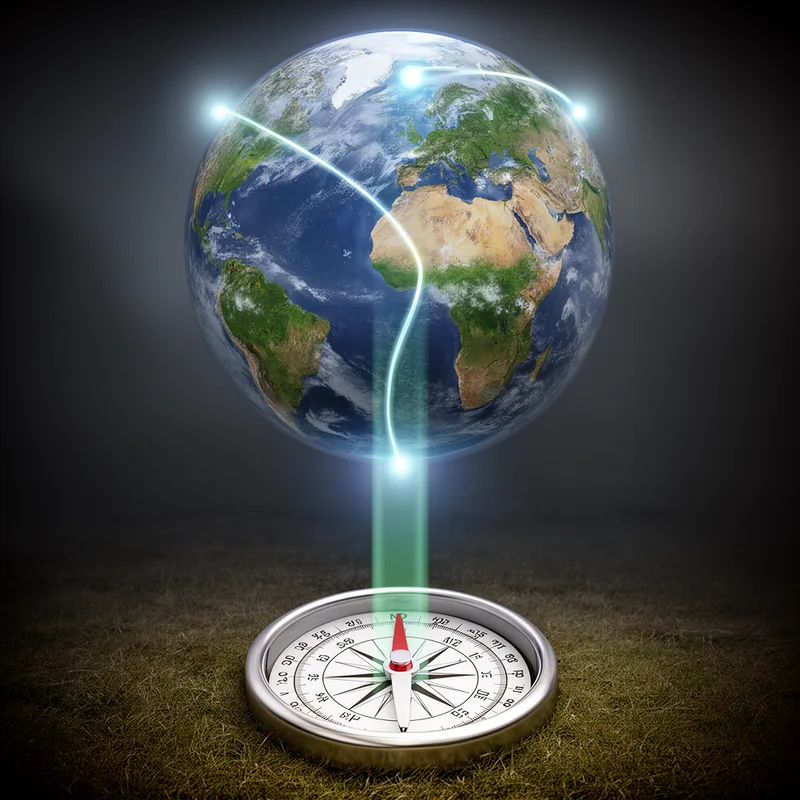
magnetic meridian
- noun
- /mæɡˈnɛtɪk məˈrɪdiən/
- Specialized
- The magnetic meridian changes slightly over time due to shifts in Earth's magnetic field.
Examples
-
Surveyors must consider the angle between the geographic and magnetic meridian when mapping land.
-
The magnetic meridian runs from the North Pole to the South Pole.
-
The compass needle aligns itself with the magnetic meridian at that location.
-
Can you locate the magnetic meridian on this map?
-
A compass points toward the magnetic meridian, helping navigators find their way.
-
When using a compass, it's important to understand the magnetic meridian and how it relates to true north.
-
Surveyors rely on the magnetic meridian to accurately measure angles and directions on the Earth's surface.
Surface Forms
Morphology
The meaning is directly compositional: 'magnetic' (relating to the Earth's magnetic field) modifies 'meridian' (a line on the Earth's surface), so the phrase denotes a meridian defined by magnetism. Although somewhat technical, this follows normal English modifier-noun composition and is inferable by a learner who knows both constituents.
Etymology
Magnetic meridian names an invisible line that joins the Earth's magnetic north and south. The word magnetic comes from magnets (like a compass) and meridian means a north-south line. A compass needle points along this line, so the phrase shows the 'direction a compass points' at a place.

