

magnetic drum
- noun
- /mæɡˈnɛtɪk drʌm/
- Archaic
- Today, a magnetic drum is mostly a historical artifact, replaced by faster storage devices.
Examples
-
Early computers used a magnetic drum for storage.
-
The magnetic drum stored all the data.
-
Engineers had to carefully synchronize memory access with the rotation of the magnetic drum.
-
The original computer used a magnetic drum to store its programs and data.
-
The early computers often used a magnetic drum to store data before the invention of modern hard drives.
-
In the 1960s, engineers developed the magnetic drum as a reliable way to access and save information.
-
The magnetic drum was essential for data storage, allowing programs to be loaded and executed efficiently in older systems.
Synonyms


 1
5.3
1
5.3
A thing that stores digital information by changing tiny areas on its surface, like a hard drive
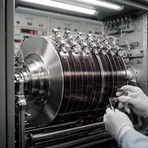
An early computer storage device using a rotating metal cylinder covered with magnetic material to hold data

A device that stores information using tiny magnetic areas like a hard drive or tape
How Much Storage

Surface Forms
Morphology
The phrase is fully compositional: 'magnetic' modifies 'drum', so a learner who knows both words can infer a cylindrical object that has magnetic properties, which directly corresponds to a drum coated with magnetic material. Although the specific technological use (data storage in early computers) is domain-specific, the core physical meaning is transparent and predictable for a B1 learner.
Etymology
Magnetic drum: The compound noun magnetic drum comes from its simple shape: a round metal drum covered with magnetic material that turned while machines wrote and read information. So, the name means an early 'data storage' device used in older computers because information was kept on the drum's surface as it turned.