

macula lutea
- noun
- /ˈmæk.jʊ.lə ˈluː.ti.ə/
- Specialized
- The focus is on a 3-millimeter-wide yellow spot, called the macula lutea, toward the back and center of the eye.
Examples
-
The macula lutea is essential for reading, as it allows for sharp and detailed vision.
-
Damage to the macula lutea can lead to significant vision loss, affecting activities like driving.
-
Doctors often examine the macula lutea during eye tests to assess visual health.
Synonyms

 2
9.6
2
9.6

A small yellow area near the center of the eye that gives sharp central vision
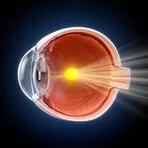
A small yellow area at the center of the back of the eye that gives sharp central vision

A small yellow area at the back of the eye that gives clear central vision
Surface Forms
Morphology
macula + lutea
The compound is compositionally a noun + adjective meaning literally 'yellow spot' (macula = central spot; lutea = yellow). However, 'lutea' is a Latin medical adjective and is not a common English word or particle, so an average B1 learner—even if they know 'macula'—is unlikely to know or recognize 'lutea' or the Latin word order; the meaning is partly recoverable but requires specialist/Latin knowledge.
Etymology
The term macula lutea comes from Latin words macula ('spot') and lutea ('yellow'), so it literally means a 'little yellow spot' near the center of the back of the eye. That simple picture, a small yellow patch full of light-sensing cells, helps explain why the name refers to the area that gives 'sharp, detailed central vision'.