
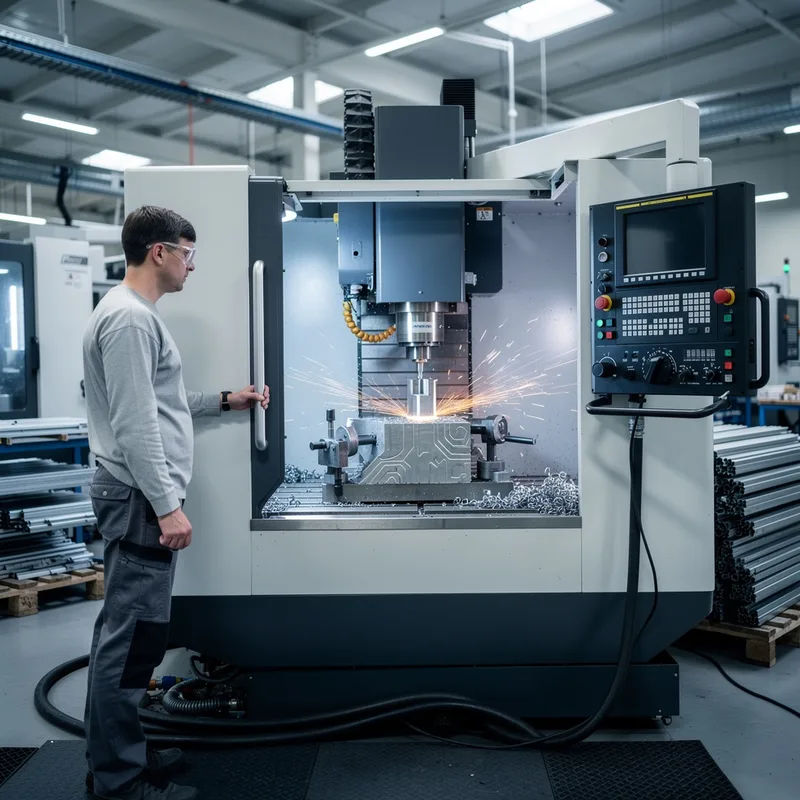
machine tool
 4
3.9
4
3.9

- noun
- /məˈʃin tuːl/
- Specialized
- The U500s are easily programmed in machine-tool (G-code) or English-like commands using supplied software.
- machine tool manufacturing
- machine tool operator
- numerically controlled machine tools
Loading YouTube…
Watch on YouTubeThere are actually ideal wheels for big machine tools and they have.
- There are actually ideal wheels for big machine tools and they have.
Examples
-
Together with representatives from industry, NIST researchers are standardizing machine tool data formats.
Academic text (2002) -
Even the most advanced machine tools are subject to error over many thousands of operating cycles.
Academic text (2000) -
What will it take to make machine tools that really think?
Academic text (2002) -
To build a collaborative route over which manufacturing engineers, designers, and machine tools will share intelligence.
Academic text (2002) -
There it was associated with a variety of machine tools, control system components, and, in recent years, robotic devices.
Fiction book (1997) -
Some of the well-known examples are in consumer electronics, business and machine tools, and industrial lasers.
Academic text (1993) -
Initial target markets are the chemical, power utility, paper/pulp, petroleum, automotive, machine tool, food processing, and pharmaceutical industries.
Academic text (1995) -
The factory uses advanced machine tools to shape metal into precise parts.
-
He learned how to operate the machine tools in his engineering class.
-
Many industries rely on machine tools for efficient production of components.
How Automated

Surface Forms
Morphology
The meaning is directly compositional: 'machine' (a powered device) + 'tool' (an implement) yields a powered implement used for machining. Even if 'tool' can imply handheld, combining it with 'machine' transparently signals an industrial, power-driven tool; this compound pattern is cross-linguistically common and readily inferable by learners who know both constituents.
Etymology
Machine tool joins the words machine, a powered device, and tool, something used to work on things, so imagine a strong, powered tool that cuts and shapes metal. That's why machine tool means 'a powered machine used for cutting, shaping, or finishing materials'.