
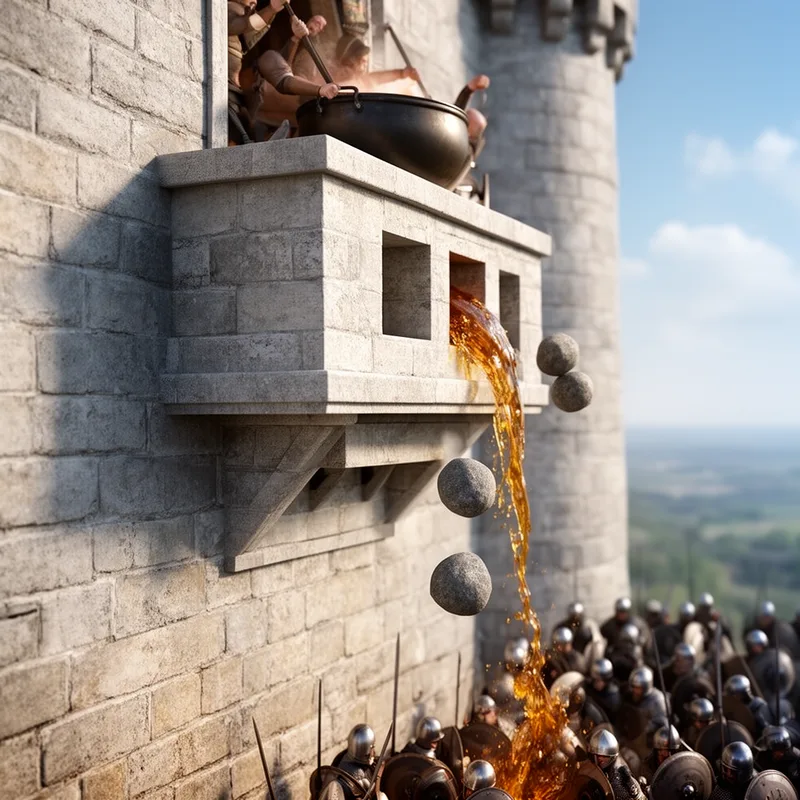
machicolation


 1
9.9
- noun
- /ˌmækɪkəˈleɪʃən/
- Archaic
- During the siege, the machicolation was used to drop stones on the invading forces trying to breach the gate.
Examples
-
The castle's machicolation provided a strategic advantage, allowing defenders to pour hot oil onto attackers below.
-
Arrow slits faced inward, covering the inner drawbridge from all sides; machicolations overhead allowed intruders to be drenched with boiling oil or something similarly noxious.
Fiction book (2000) -
From the machicolation of the fort, the soldiers could easily target anyone attempting to climb the walls.
How Defensive

Surface Forms
Morphology
machicolation = machicol + ation
The root 'machicol' is a borrowed, non‑productive element in English and the specialized architectural meaning cannot be derived by knowing the suffix '-ation' alone.
Etymology
The word machicolation comes from old French parts machi- ('to crush') and -col ('neck'). A helpful way to remember it is to picture a part of a castle wall that sticks out with holes so defenders could drop stones or boiling oil onto attackers below, which explains why machicolation means a projecting defensive opening with holes for dropping things.