
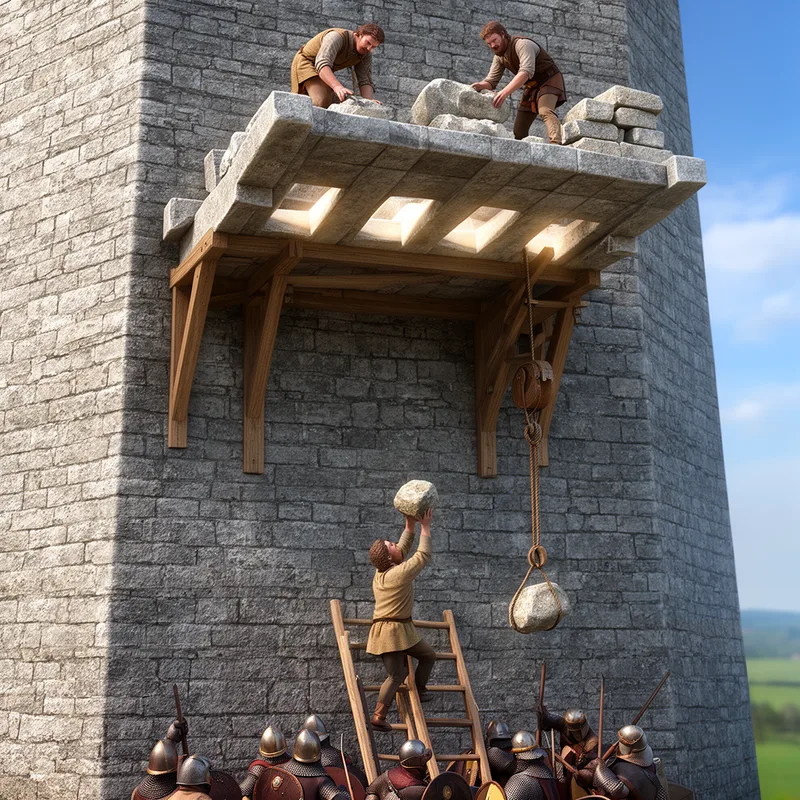
to machicolate


 1
9.9
- verb
- /ˈmækɪkəˌleɪt/
- Archaic
- Medieval architects often machicolated castle walls as a protective measure.
Examples
-
The fortress was machicolated to improve its defenses against invaders.
-
They planned to machicolate the northern tower during the restoration project.
-
The castle was machicolated for better defense.
-
They plan to machicolate the new fortress next year.
-
Medieval architects often machicolated castle walls to allow defenders to drop objects on attackers.
-
The fortress was machicolated to create openings for defenders during enemy assaults.
-
They planned to machicolate the northern tower to enhance its defense capabilities.
Synonyms
 1
9.9
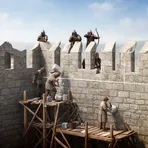
To add gaps and raised parts to a wall so soldiers can defend it from above
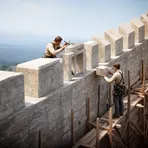
To make the top of a wall have raised parts and openings for defense
Surface Forms
Morphology
machicolate = machicolation (opaque) = machicolation + ate
The verb is formed regularly from the noun by the productive English suffix '-ate' meaning 'to provide with' or 'to make', so the morphological operation is regular.
Etymology
The word machicolate comes from the old word machicolation for the small balcony in a castle wall with holes to drop stones or boiling water on attackers. So to machicolate a building is to add those defensive openings that let defenders 'drop' things on people below.