
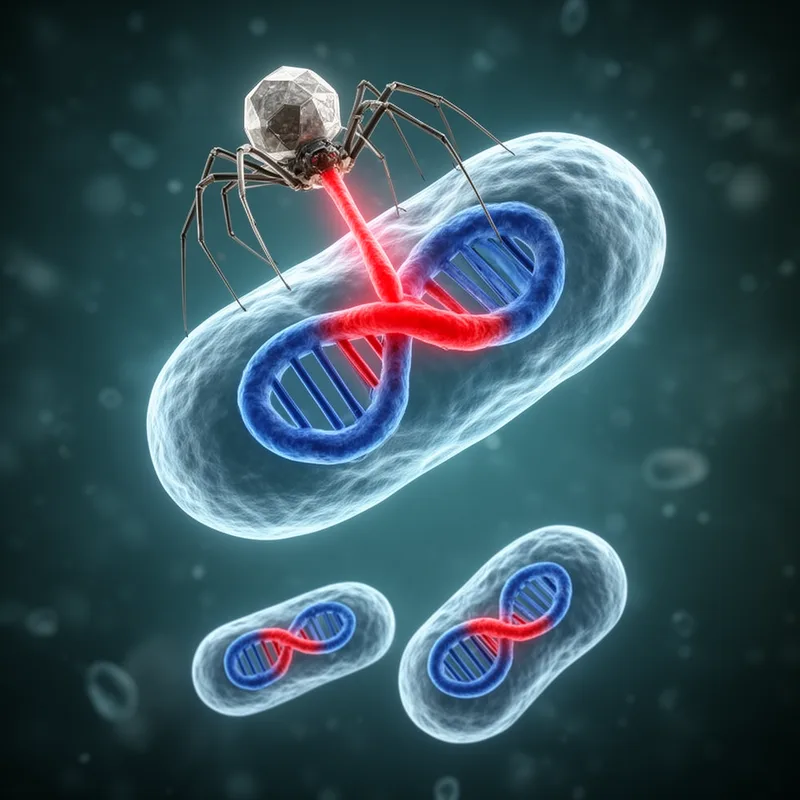
lysogenization
- noun
- /ˌlaɪsədʒənaɪˈzeɪʃən/
- Specialized
- After lysogenization, the bacterium incorporates the phage's DNA and can pass it to future generations.
Examples
-
After lysogenization, the bacterial cell can replicate the viral DNA along with its own.
-
Scientists study lysogenization to understand how phages affect bacterial evolution.
-
The efficiency of lysogenization varies depending on the bacteriophage and the host strain.
-
The process of lysogenization is crucial for understanding viral behavior.
-
Researchers studied lysogenization in various bacterial strains.
-
Scientists study lysogenization to learn how bacteriophages can influence bacterial populations over time.
-
The lysogenization process allows the virus to remain dormant within the host's genome until activated.
How Complete
- Specialized

- Specialized
Surface Forms
Morphology
lysogenization = lysogenize (opaque) = lysogen + ize + ation
Forming a noun by adding '-ation' to the verb 'lysogenize' is a standard and predictable nominalization.
Etymology
Lysogenization comes from parts that mean 'to break' and 'gene', with lyso- from a Greek word for 'to break or loosen' and -gen like in gene or genetic meaning 'origin' or 'birth'. A helpful way to remember lysogenization is that it is the process when a virus's genes become part of a bacterium and can later cause the cell to 'break', so the old roots explain the modern meaning.

