
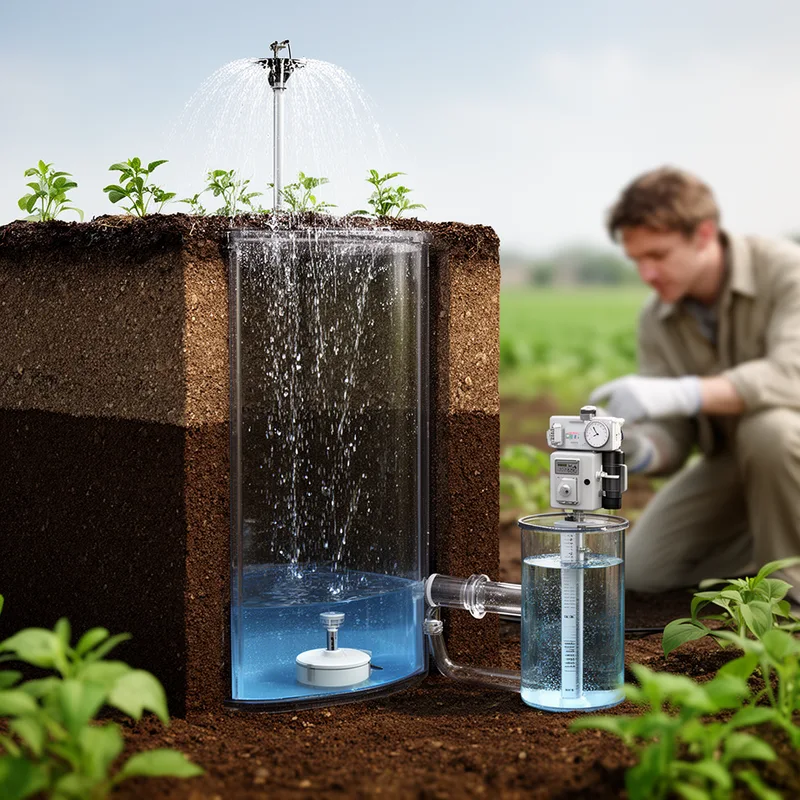
lysimeter
- noun
- /ˈlɪzɪˌmɛtər/
- Specialized
- Scientists monitored the pepper plants' water use by measuring the change in weight of a research lysimeter—a large, in-ground, soil-filled box with pepper plants growing on top of it and a huge scale beneath it.
Examples
-
Devices called lysimeters are sometimes inserted into the ground to collect subsurface water, called leachate.
Academic text (2001) -
Researchers installed multiple lysimeters to evaluate water drainage in different soil types.
-
For this 2-year study, scientists installed 12 lysimeters.
Academic text (1994) -
The lysimeter data is a first step toward determining what's known as a "crop coefficient" specifically for bell peppers.
Academic text (2006) -
At the start of the project, eight suction cup lysimeters were installed at the composting site to collect samples of soil water for NO3-N analysis.
Academic text (1996) -
To bring in the grazing component, four of each set of six lysimeters (drought vs. normal rainfall) were grazed by sheep in the spring and summer of 1994.
Academic text (1994) -
The region's farm advisors, irrigation specialists, and growers—who may not have the benefit of their own research lysimeter—can use the figure to calculate how much water their pepper crop used in the previous several days.
Academic text (2006) -
Scientists used a lysimeter to measure water loss through evaporation in the soil.
-
The lysimeter provided crucial data on how much water leached from the agricultural field during the study.
Surface Forms
Morphology
Etymology
The word lysimeter comes from the Greek parts lysis ('to loosen' or 'break apart') and -meter ('measure'), the same -meter you see in thermometer. So, a lysimeter is a device that measures how much water drains out of the soil.

