
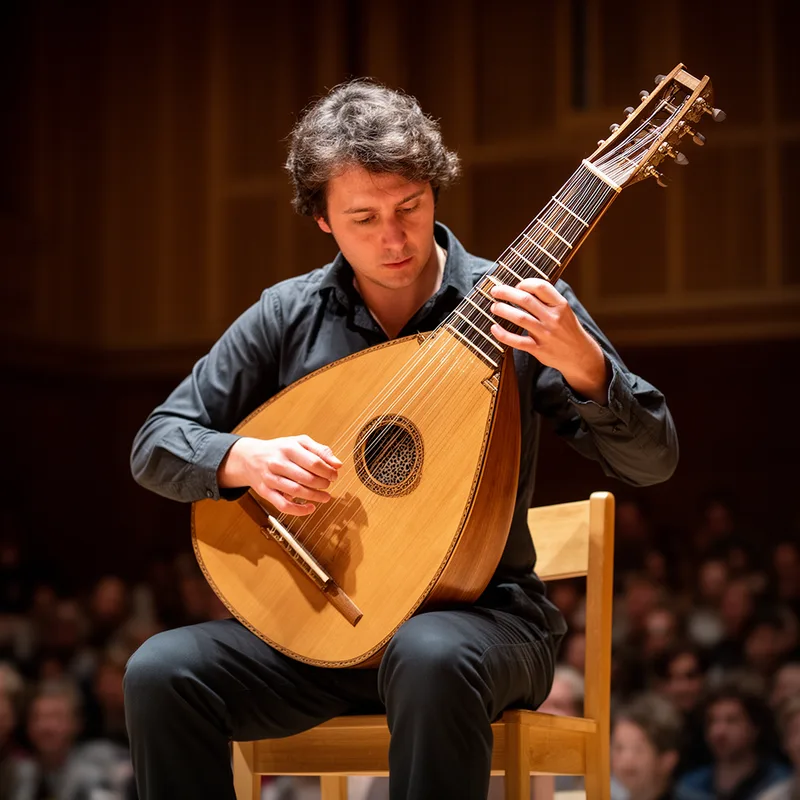
lutenist


 1
9.9
1
9.9
- noun
- /ˈluːtənɪst/
 :
lutista
:
lutista
- As a renowned lutenist, she often played during historical reenactments, showcasing authentic music from the Baroque period.
- find a lutenist
Examples
-
Did you see the lutenist play at the festival?
-
The renowned lutenist captivated the audience with his delicate performance.
-
During the recital, a young lutenist played pieces from the Baroque era.
-
She studied with a master lutenist to perfect her technique on the instrument.
-
The lutenist performed beautifully at the concert.
-
The talented lutenist performed beautifully at the Renaissance fair, enchanting the audience with his melodies.
-
The music teacher invited a professional lutenist to give a workshop on playing techniques for students interested in early music.
Synonyms


Surface Forms
Morphology
Etymology
The word lutenist comes from the instrument name lute plus the ending -ist meaning a person who plays it; lute comes from Arabic al-ʿūd, which means 'the wood', so a lutenist is simply someone who plays that wooden, stringed instrument.