
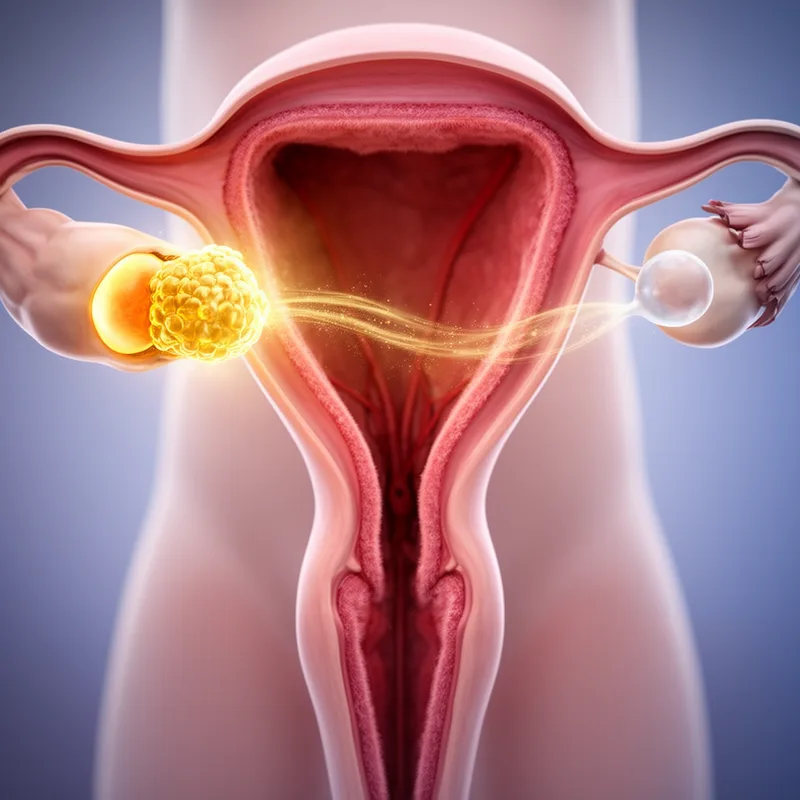
luteal phase


 1
6.1
1
6.1
- noun
- /ˈluːtiəl feɪz/
- Specialized
- And we see that an A drop in that REM sleep in that luteal phase, which is the second-half of the cycle, the second-half of the cycle.
Examples
-
For the menstruation phase, data were collected on the second day of menses; for the follicular phase, on the 11th day; and for the luteal phase, on the 24th day of the cycle.
Academic text (2012) -
You know when I'm in my luteal phase, I tell you everything.
-
Like the different phases, the luteal phase, of course, the yeah, all those sorts of things.
-
Probably the most notable finding was that the rate of firing rises in the late luteal phase, and the fluctuations in motor unit activity over the menstrual cycle could be a predisposing factor for the increased rate of knee pain in women.
Blog text (4) -
It is the luteal phase—the time between your ovulation and the next expected period—that is dangerous territory when it comes to alcohol.
Blog text (23) -
A woman's luteal phase is crucial for determining her chances of becoming pregnant.
-
Monitoring the luteal phase can help identify issues related to fertility in women.
-
Doctors often examine the luteal phase to assess a woman's menstrual health.
Synonyms
The phase after ovulation when the womb lining becomes ready for an embryo
Surface Forms
Morphology
The meaning is directly compositional: 'luteal' means 'pertaining to the corpus luteum' and 'phase' means 'a stage,' so the phrase denotes the stage associated with the corpus luteum (the post-ovulation stage). This biomedical naming pattern is cross-linguistically common and therefore immediately understandable to a learner who already knows both constituent words.
Etymology
The noun luteal phase comes from a word meaning 'yellow' and refers to a small yellow body in the ovary called the corpus luteum that forms after ovulation. That's why the luteal phase is the time after ovulation when that yellow body makes hormones to get the womb ready for pregnancy.