

lupus erythematosus
- noun
- /ˈluːpəs ˌɛrɪθəˈmætəsəs/
- Specialized
- The prevalence of systemic lupus erythematosus (SLE) has increased over the past decade, with a significant burden on individual quality of life, disability, and treatment utilization.
- systemic lupus erythematosus
- lupus erythematosus (SLE)
Examples
-
Summary of evidence. SLE = systemic lupus erythematosus.
Academic text (2017) -
Title: Biologic response modifiers for systemic lupus erythematosus
Academic text (2017) -
Children and adults diagnosed with systemic lupus erythematosus, regardless of prior treatment status.
Academic text (2017) -
Summary of evidence. SLE = systemic lupus erythematosus. # Population
Academic text (2017) -
SLE = systemic lupus erythematosus. Search Query Items found.
Academic text (2017) -
However, it was not until the mid-nineteenth century that two specific skin diseases were separated as lupus erythematosus and lupus vulgaris.
Academic text (2007) -
Identical lesions have been described in cases of rheumatoid arthritis, lupus erythematosus, and scleroderma, and one case of Crohn's disease.
Academic text (2007) -
Risk factors for the development of NSAID-induced aseptic meningitis include heavy use of the drugs, systemic lupus erythematosus, and mixed connective tissue disease.
Academic text (1998) -
In young patients, it is commonly hereditary, but after the second decade, its onset is often linked with underlying causes, particularly scleroderma and systemic lupus erythematosus.
Academic text (2007) -
Systemic lupus erythematosus is a chronic autoimmune disease that can affect multiple organs in the body.
Synonyms
 35
7.8
35
7.8

A long-lasting disease where the body's defense system attacks its own parts, often causing skin rashes and joint pain
 1
7.0
1
7.0
A long-term illness where the immune system attacks the body, causing tiredness, joint pain, and skin rashes


 1
8.8
1
8.8
A long-lasting disease that makes the body attack its own skin and joints

A long-term disease where the immune system attacks the body's own tissues, causing tiredness, joint pain, and skin rash

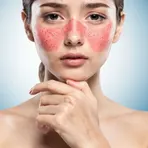
A disease in which the immune system attacks many body parts, causing tiredness, joint pain, and a face rash
How Severe
- Specialized

- Specialized
Surface Forms
Morphology
The compound is directly compositional: 'lupus' names the disease and 'erythematosus' describes inflamed/red tissue, so a learner who knows both constituents can infer it refers to the inflammatory form of lupus. This follows regular noun + adjectival modifier patterns (common in medical terminology and cross-linguistically stable), making the overall meaning predictable from the parts.
Etymology
Lupus erythematosus may come from old doctors' names: lupus (Latin for 'wolf') because the skin sores looked like a wolf's bite, and erythematosus means 'red' for the rash. So, the name helps you remember that this disease causes red skin rashes and can damage joints and other parts of the body.