
luciferin


 1
9.9
- noun
- /luːˈsɪfərɪn/
- Specialized
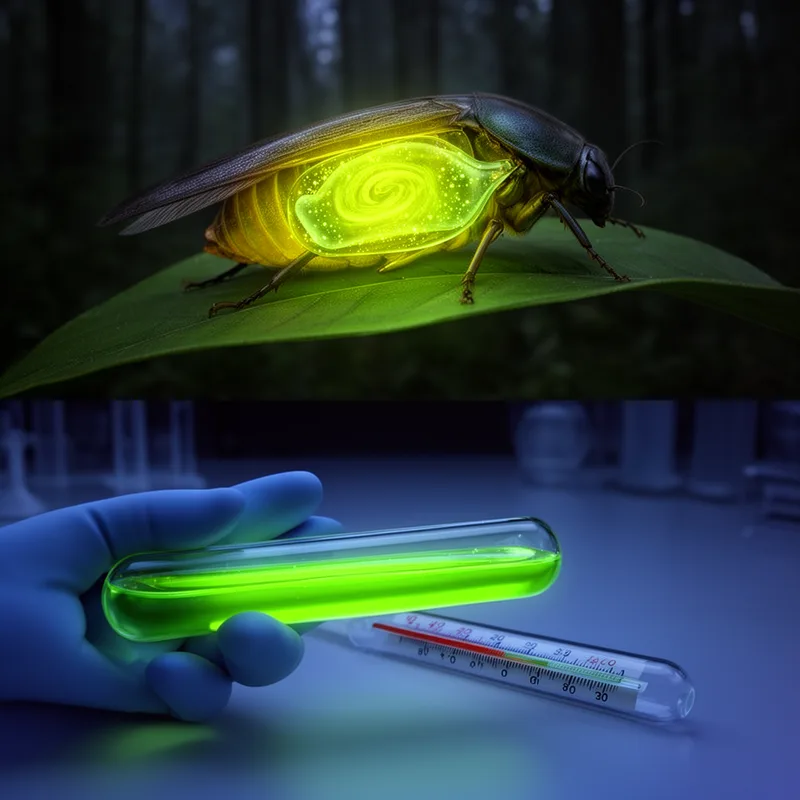
- Fireflies glow brightly because of a pigment called luciferin that emits light during a chemical reaction.
- luciferin and luciferase
Examples
-
Scientists studied how luciferin interacts with enzymes to create the captivating glow of deep-sea creatures.
-
So the assays and a lot of biological work is based on the luciferin luciferase reaction.
-
"Luciferin is what they call that chemical that makes lightning bugs light up."
Fiction book (1995) -
Did he say something about bioluminescence using luciferin and luciferase?
Academic text (2008) -
Synthetic luciferin has long been available, and the firefly luciferase gene has been cloned.
Academic text (2003) -
In the firefly lantern, thousands of specialized cells called photocytes sequester luciferin and luciferase deep within their interiors.
Academic text (2003) -
These transgenic mice had a special luciferase gene attached to their DNA that, when exposed to luciferin, would emit light (compliments of our favorite summer insect, the firefly).
Academic text (2008) -
The process of bioluminescence in certain organisms relies on luciferin to produce light.
Surface Forms
Morphology
Etymology
The word luciferin comes from the Latin word lucifer, which means 'light-bringer' and contains the small root luc- meaning 'light', like in lucid. That's why luciferin is the molecule that brings light in fireflies and other glowing animals.