

loudly
 172
1.0
172
1.0

- adverb
- /ˈlaʊdli/
 :
en voz alta
:
en voz alta
- I would just loudly announce the guest's name.
- speak loudly
- say loudly
- talk loudly
I would laugh loudly, I would enjoy life.
- I would laugh loudly, I would enjoy life.
- If you speak too loudly, something bad may happen to you.
- Elliot coughs loudly, interrupting my train of thought.
- It's screaming so loudly that it's louder than the task.
- We've had it made loudly from Link's truck.
Examples
-
And I said to him very loudly, thanks for having your ID out early.
-
If you speak too loudly, something bad may happen to you.
-
But I think you should all project loudly so that anybody can hear.
-
I would laugh loudly, I would enjoy life.
-
I want her to say that loudly.
-
In front of the entire staff, he loudly declares his affection for her.
Academic text (1999) -
My neighbor is singing so loudly next door and she's really bad.
-
The people around the table laughed loudly, and several raised their cups to salute Jorge's jibe.
Academic text (1990) -
The neighbors played the stereo loudly; the bass shook the walls, and David resented it.
Fiction book (1990) -
The children laughed loudly during the birthday party.
Synonyms
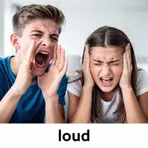 447
1.0
447
1.0
In a way that makes a lot of noise
 17
4.4
17
4.4
Use all your voice to shout or sing very loudly
 13
1.0
13
1.0
In a loud, often unpleasant way
 5
4.4
5
4.4
To do something very suddenly and with great force
 2
5.1
2
5.1
In a very loud and powerful way like thunder
 2
4.1
2
4.1
As loudly as possible so people can hear
 1
7.9
1
7.9
In a loud, rough way that bothers other people
 1
7.5
1
7.5
In a very loud or obvious way that people notice easily


 1
4.4
1
4.4
Extremely loudly so you can hardly hear anything else
 1
7.2
1
7.2
In a very loud and excited way
 1
4.1
1
4.1
In a noisy, energetic, and cheerful way

In a very loud and powerful way

Spoken in a very loud and strong voice

To make loud, harsh, and unpleasant sounds

In a loud, out of control way that draws attention

In a loud, demanding way that draws attention

In a way that makes a deep clear sound that fills a space and echoes
Antonyms


How Loud

Surface Forms
Morphology
Etymology
Loudly comes from the simple word loud, which originally came from an old English word meaning 'strong sound' or 'noisy'. So to speak loudly is to make a strong sound that others can hear.