
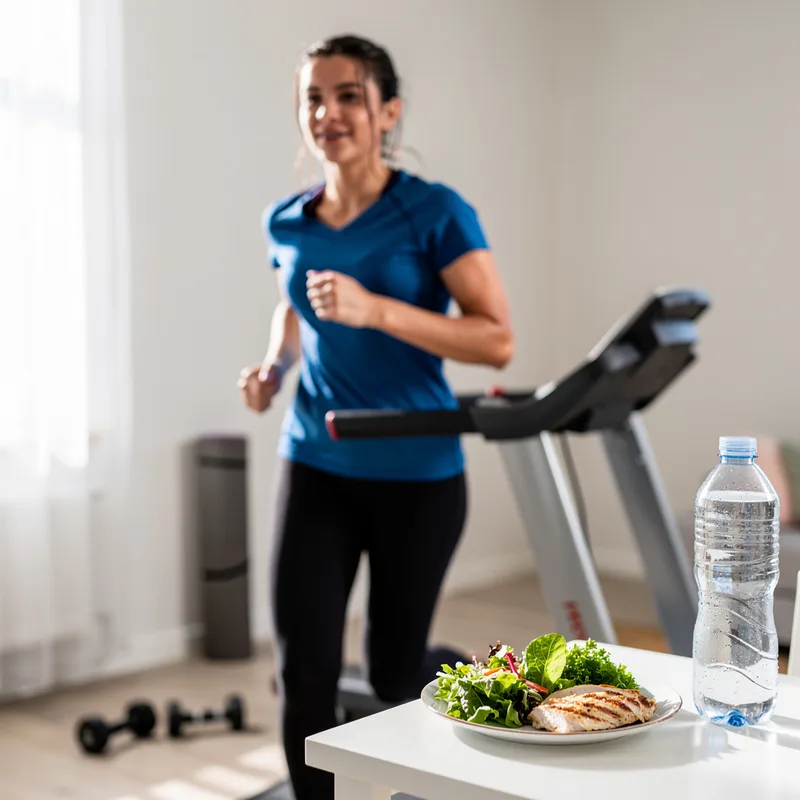
to lose fat
 4
3.0
4
3.0

- phrasal verb
- /luːz fæt/
- To lose fat, it's important to combine a healthy diet with physical activity.
- lose fat and gain muscle
- help you lose fat
- workout to lose fat
Loading YouTube…
Watch on YouTubeIt's going to help you lose fat and that's the difference.
- It's going to help you lose fat and that's the difference.
- I teach women to lose fat through working out and exercising.
- Doesn't help you lose fat any faster really.
- So yes, you feel thinner, but it's not because you lost fat, you lost muscle.
- You can start to lose fat today.
- So patients are losing fat, but they're losing muscle as well.
- We're also talking about losing fat so that it stays off as long as possible.
- Many people are athletes who need to lose fat.
- I specialize in super slow training system and my clients love training with me because I help them get in shape, lose fat and get stronger.
- So in in studies where we look at if they basically control what people eat and just add aerobic exercise, they tend to lose fat.
- Contest bodybuilders who've near mastered the art of losing fat while maintaining muscle.
- But for me to lose fat and build muscle.
- It is, yes, you're going to lose fat faster.
- And so all we can expect at this point is to lose fat.
- Three, most of people are not aware that not only do you lose fat, but you lose muscle.
Examples
-
But for me to lose fat and build muscle.
-
Seeing that most of my clients want to lose fat, optimal diet adherence is high on my priority list.
Blog text (15) -
You can start to lose fat today.
-
We're also talking about losing fat so that it stays off as long as possible.
-
Is it worth trying to lose fat and build muscle at the same time?
Blog text (8) -
How do you try to lose fat and build muscle at the same time?
Blog text (8) -
First, let's answer the question if it's possible to lose fat and build muscle at the same time.
Blog text (8) -
I teach women to lose fat through working out and exercising.
-
Cardio training will help you lose fat, slim you down, and is essential for losing weight.
Blog text (9) -
The only way to lose fat is to reduce caloric intake.
Blog text (16)
Synonyms
 24
2.9
24
2.9
To lose body weight
 24
3.3
24
3.3
To eat less and control what you eat usually to lose weight or improve health
 5
3.0
5
3.0
To lose weight and become thinner
Antonyms

How Lean
4
3.0
 45
2.2
45
2.2
Surface Forms
Morphology
The meaning 'to reduce body fat' is directly and compositionally derived from 'lose' (to undergo a decrease) + 'fat' (body fat). This follows the common and cross-linguistic pattern 'lose + noun' (e.g., lose weight), so a B1 learner who knows both constituents will readily infer the meaning.
Etymology
The phrase lose fat puts together lose and fat: imagine your body letting go of extra fat, the soft parts that add weight, when you eat less or exercise more. So lose fat means 'to reduce the amount of fat in your body'.