
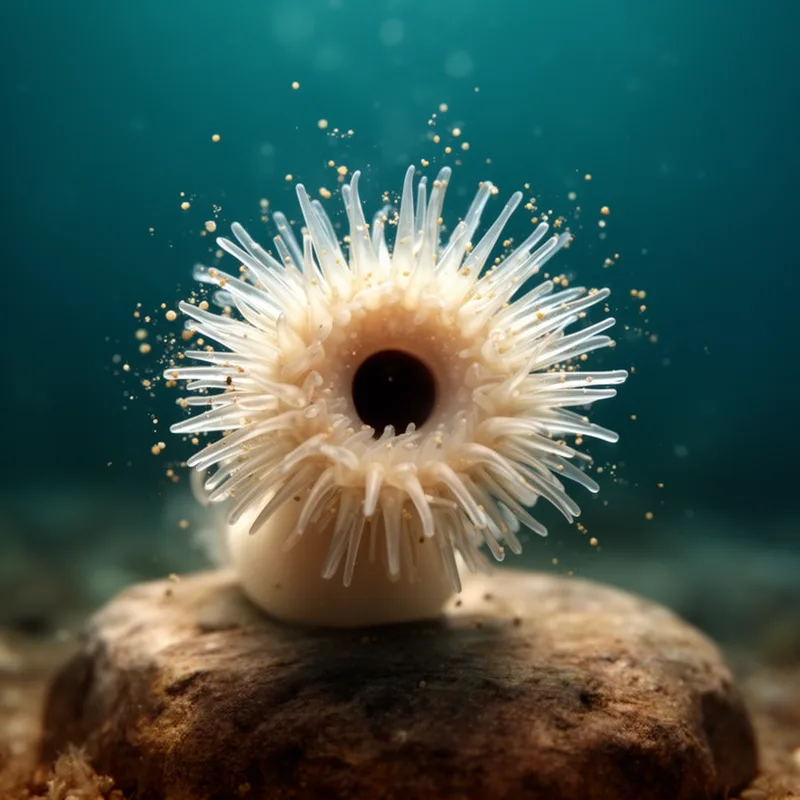
lophophore


 1
9.9
- noun
- /ˈlɒfəˌfɔr/
- Specialized
- Based on these measurements, lophophore height was calculated using the equation: Height = the square root of csup2 - (1/4)(a - b) sup2.
Examples
-
The reduced mean lophophore sizes probably account for the reduced rates of colony growth described earlier (Woollacott et al. 1989), because food particle collection rates are known to vary with lophophore dimensions in other bryozoan species (Best and Thorpe 1986).
Academic text (1998) -
Many aquatic animals rely on their lophophore to collect food from their environment effectively.
-
The reduced mean lophophore sizes probably account for the reduced rates of colony growth described earlier (Woollacott et al. 1989), because food particle collection rates are known to vary with lophophore dimensions in other bryozoan species (Best and Thorpe 1986).
Academic text (1998) -
The lophophore is a unique feeding structure that helps the animal capture small particles from the water.
-
In certain marine species, the lophophore acts as a crown of tentacles that assists in respiration and feeding.
Surface Forms
Morphology
lophophore = loph + phore
Built from Greek combining forms ('loph-' + '-phore') that are not standalone English words, so the meaning is specialized and not derivable by an average B1 learner from familiar English bases.
Etymology
The word lophophore comes from Greek parts lophos 'crest' or 'tuft' and -phore 'bearer', so it means 'crest-bearer'. So, a lophophore is a crown or ring of tentacles the animal carries around its mouth to catch tiny food from the water.