
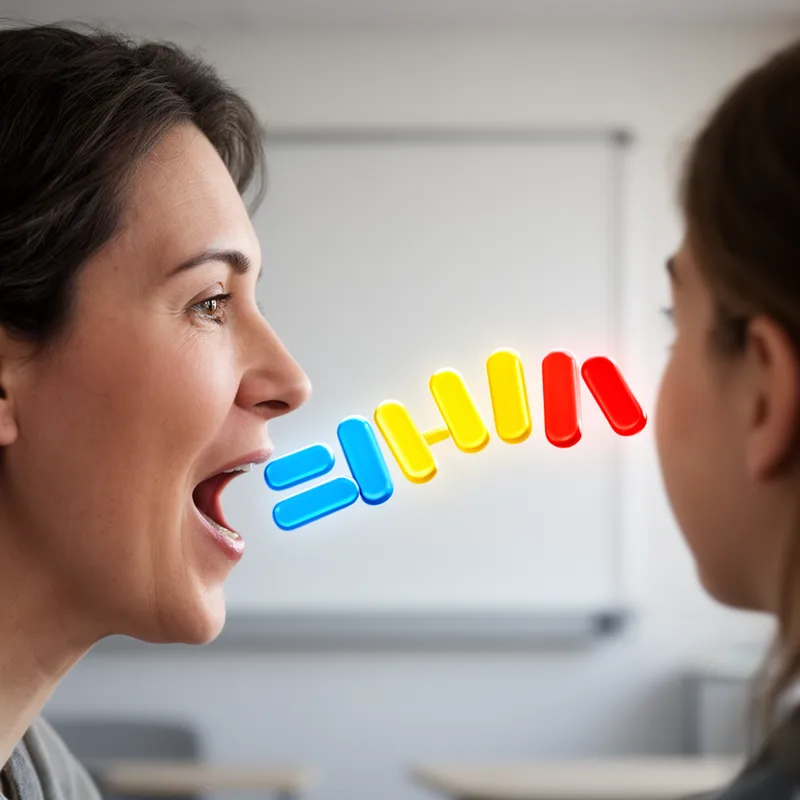
locutionary
- adjective
- /loʊˈkjuːʃənəri/
- Specialized
- Speech act theory, as explained by J. L. Austin, suggests that a single utterance contains three kinds of speech acts: (a) locutionary act: the act of saying something; (b) illocutionary act: the performance of an act in saying something; and (c) perlocutionary act: the consequential effects of the feelings of the audience, or of the speaker, or of other persons.
- locutionary act
Examples
-
However, although Austin focuses on the illocutionary force, he also calls attention to the visceral effects of all utterances, whether locutionary or perlocutionary.
Academic text (2017) -
Its effective meaning is not so much locutionary—concerning the verifiable content of the statement—as it is illocutionary: it performs its work in "appropriate circumstances," in a context and for an audience that understands, or at least repeats and is organized by convention.
Academic text (2002) -
If we choose to proceed with this endeavor, we must remember that the narrator is by definition nothing but a locutionary agent, so the only source of information about him is his current speech activity or narrative act.
Academic text (1990) -
While, on one level, speaking or writing is already an action (a locutionary act), on another level, we also perform actions in saying something (an illocutionary act) or by—or in consequence of—saying something (a perlocutionary act).
Academic text (2017) -
In linguistics, a locutionary act refers to the actual words spoken in a conversation.
-
Understanding the locutionary aspect of speech helps us analyze how meaning is conveyed through word choice.
-
The professor explained that a locutionary phrase can influence the interpretation of a statement.
Surface Forms
Morphology
Etymology
Locutionary comes from the root loqu- meaning 'to speak', the same root you see in eloquent. So a locutionary act is about the actual words someone says, the exact words used when speaking.

