
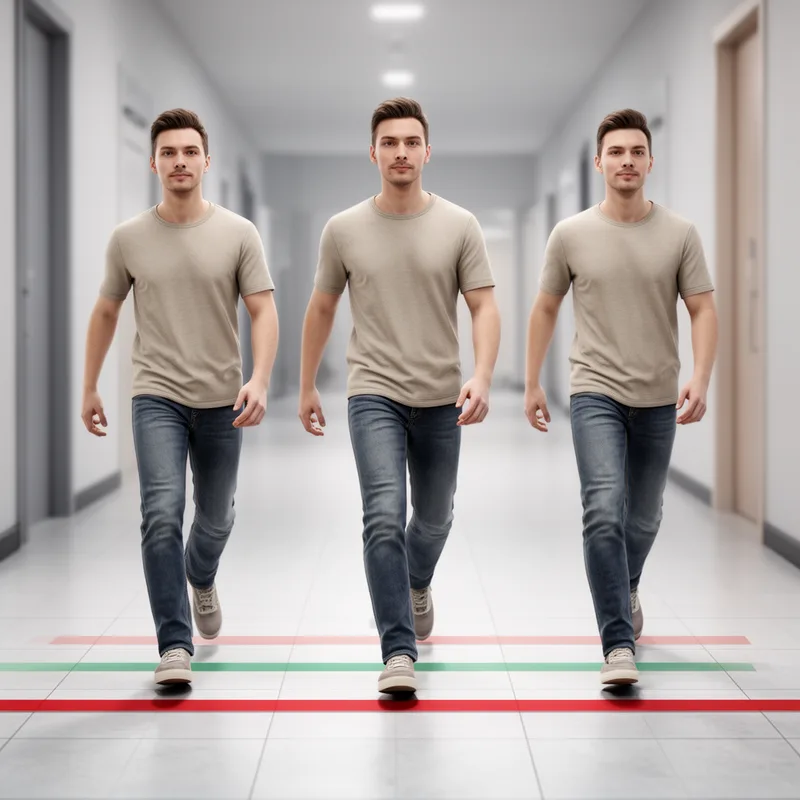
to locomote


 1
7.9
1
7.9
- verb
- /ˈloʊkəˌmoʊt/
- Specialized
- The correctness of the entity is that, at the time you pass the figure of your day on the course, sounding up in the air testing to locomote your globe, you will necessitate satisfactory safety from the sun.
Examples
-
Although kangaroo rats show a good basic ability to locomote in water by swimming, in the same way that other terrestrial mammals are able to swim (G. J. Kenagy, University of Washington, Seattle, personal communication, 2002), they were apparently unable to rescue themselves from the torrential flood that occurred.
Academic text (2002) -
Many animals use their legs to locomote across different terrains when searching for food.
-
He will locomote, he will fly, and he and he will actually avoid running into things.
-
Let's locomote.
-
In addition to being brief, grey seal locomotion on land may not be stereotypical enough to accurately classify when moving over short distances, as females will often alternate between vigilance and directed movement, as well as being able to locomote while still on their side.
Academic text (2018) -
Goldfield (1989) reiterated the earlier findings of Gibson (1988) that revealed that orienting the eye-head system to objects and persons in the environment motivated the infant to locomote.
Academic text (1996) -
The toddler learned to locomote on her own after weeks of practice in the park.
-
To reach the top of the hill, we need to locomote at a steady pace.
Synonyms
 ∞
1.0
∞
1.0
To move from one place to another, physically or in meaning
 ∞
1.0
∞
1.0
Change position or place
 ∞
1.0
∞
1.0
To go from one place to another, often for work or pleasure
 25
3.3
25
3.3
To move or travel freely over an area
Antonyms


How Fast

Surface Forms
Morphology
locomote = locomotion (semi-transparent) = loco + mot
The verb is recognisable as related to 'locomotion' (movement), but its internal Latin combining forms are not independent English words, so learners may not fully analyse it from components.
Etymology
The word locomote breaks into parts that mean 'place' and 'to move': loco- meaning 'place' and movere meaning 'to move', the same root you see in the common words move and motion. So to locomote is to move or travel from one place to another.