
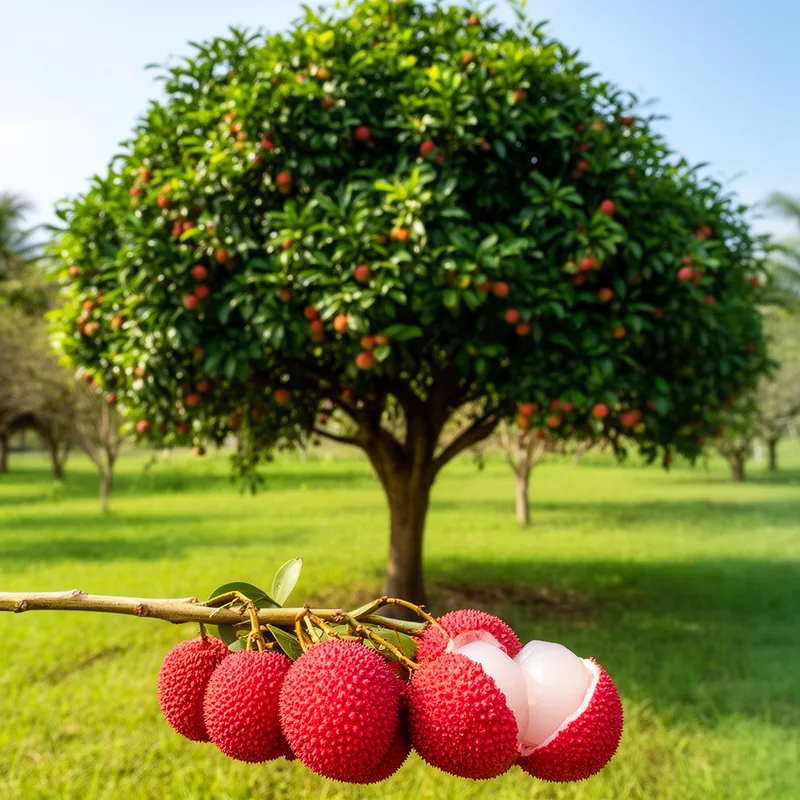
litchi tree
- noun
- /ˈlɪtʃi tri/
- UK
- The suggested role of litchi trees needs to be more thoroughly investigated to explain disease ecology.
Examples
-
The gardener planted a new litchi tree in her backyard to enjoy the delicious fruit.
-
One possible scenario is that fruit-bearing litchi trees can attract bats, which might be the reservoir for the putative pathogen.
Academic text (2012) -
Deforestation in Bac Giang to develop the growing of litchi trees because of their high economic value might have also disrupted the ecological equilibrium of the province, leading to the emergence of a new vector-borne disease (13).
Academic text (2012) -
We sat under the shady litchi tree while enjoying a picnic on a hot summer day.
-
In India, many farmers cultivate litchi trees for their sweet and aromatic fruit.
Synonyms
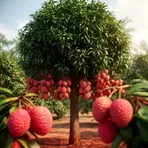
A tropical tree that produces sweet oval fruits with rough red skin called lychee

A tropical tree that grows lychee fruit

A tropical evergreen tree that makes sweet red fruits
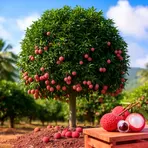
A tree that keeps its leaves and produces edible fruit in warm climates
How Tall


Surface Forms
Morphology
The meaning is fully compositional: 'litchi' names the fruit and 'tree' names the plant, so 'litchi tree' denotes a tree that produces litchi fruit. Noun–noun type compounds that label a kind of tree are common cross-linguistically, so a B1 learner who knows both constituents will readily infer the meaning.
Etymology
Litchi tree got its name from the sweet fruit called litchi that comes from China. The phrase paints a simple picture—the tree that bears the 'litchi' fruit—so it means a tree grown for that sweet, edible fruit.