

linguistic atlas
- noun
- /lɪŋˈɡwɪstɪk ˈætləs/
- Specialized
- Creating a linguistic atlas requires extensive fieldwork and interviews with local speakers to document their unique dialects.
Examples
-
Scholars used the linguistic atlas to compare variations in word usage across Europe.
-
The linguistic atlas provides an overview of regional dialects throughout the country.
-
Creating a linguistic atlas requires extensive fieldwork and data collection from local speakers.
-
The linguistic atlas provides insights into regional dialects.
-
Have you seen the new linguistic atlas published by the university?
-
The linguistic atlas illustrates how dialects differ from one region to another, providing insights into language variation.
-
Researchers consulted the linguistic atlas to analyze the geographical distribution of specific language usages across various communities.
Synonyms
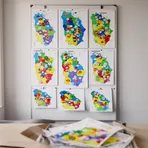
A collection of maps showing where different words and pronunciations are used
How Detailed


Surface Forms
Morphology
The meaning is directly and transparently built from 'linguistic' (pertaining to language) modifying 'atlas' (a book of maps), so a learner who knows both words can infer it is an atlas showing language-related maps or distributions. This adjective + noun composition is cross-linguistically common and follows normal English compounding, making the sense immediately comprehensible to a B1 learner.
Etymology
Linguistic atlas combines linguistic ('about language') and atlas ('a book of maps'): imagine maps that show language features instead of roads. This is why a linguistic atlas shows where certain words or 'dialects' are used across different places.