
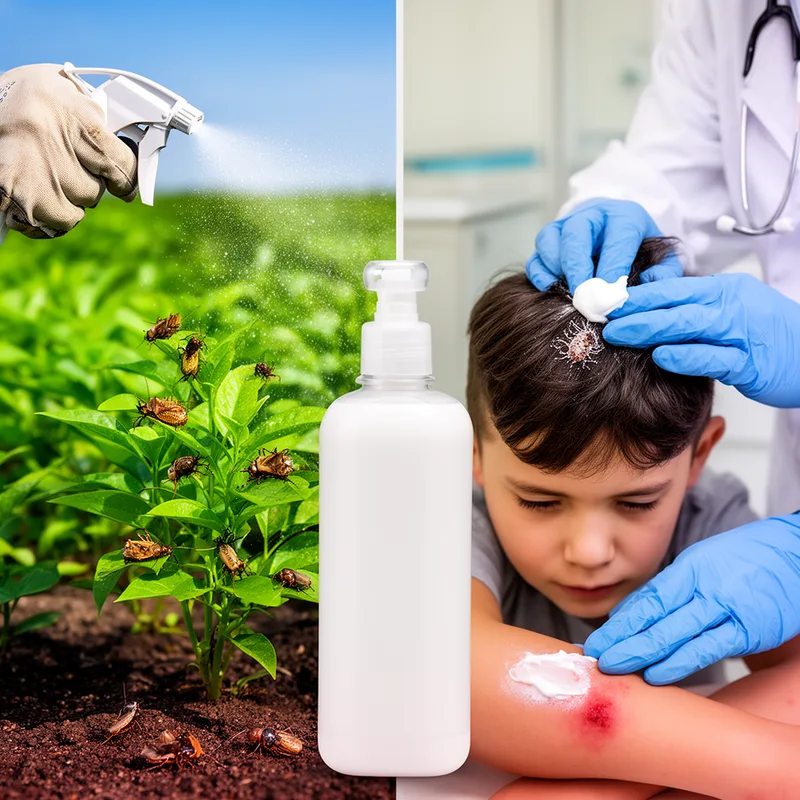
lindane
 1
9.9
1
9.9

- noun
- /ˈlɪnˌdeɪn/
- Specialized
- In agricultural settings, lindane is used as an insecticide to protect crops from pests.
- lindane and heptachlor
Examples
-
This indicates widespread, more recent exposure for lindane from a dispensed source such as water or food.
Academic text (1993) -
DDT-type compounds were the most abundant, followed by lindane and heptachlor.
Academic text (1993) -
Since the breakdown product for lindane was not found, this could represent recent exposure.
Academic text (1993) -
This indicates more recent exposure to lindane, possibly through a dispersed source such as water or food.
Academic text (1993) -
Lindane was very widespread, and no breakdown products were detected.
Academic text (1993) -
An example of a particular problem that has been resolved involved canola seed in Canada, on which the chemical lindane was used.
Academic text (2000) -
One year, the missionaries also treated the whole island with lindane, a prescription drug used to treat scabies.
Academic text (1998) -
Lindane showed a high percent occurrence at 96 percent and had an average tissue level of 0.21 ppm.
Academic text (1993) -
Lindane occurred in 96 percent of the samples, with a mean value of 0.20 ppm, and no breakdown products were detected.
Academic text (1993) -
Lindane occurred in 96 percent of the samples, with an average level of 0.20 ppm and a maximum level of 1.01 ppm.
Academic text (1993)
Synonyms
A man-made chemical that kills insects and stays in the environment

A medicine in cream or shampoo that kills lice and tiny mites that make skin itch
Surface Forms
Etymology
The word lindane was created as a name for a specific chemical, and its ending -ane is the same ending you see in simple chemical words like methane and propane, so it sounds like a chemical name. That's why lindane today refers to a chemical pesticide used to kill lice and crop pests.