
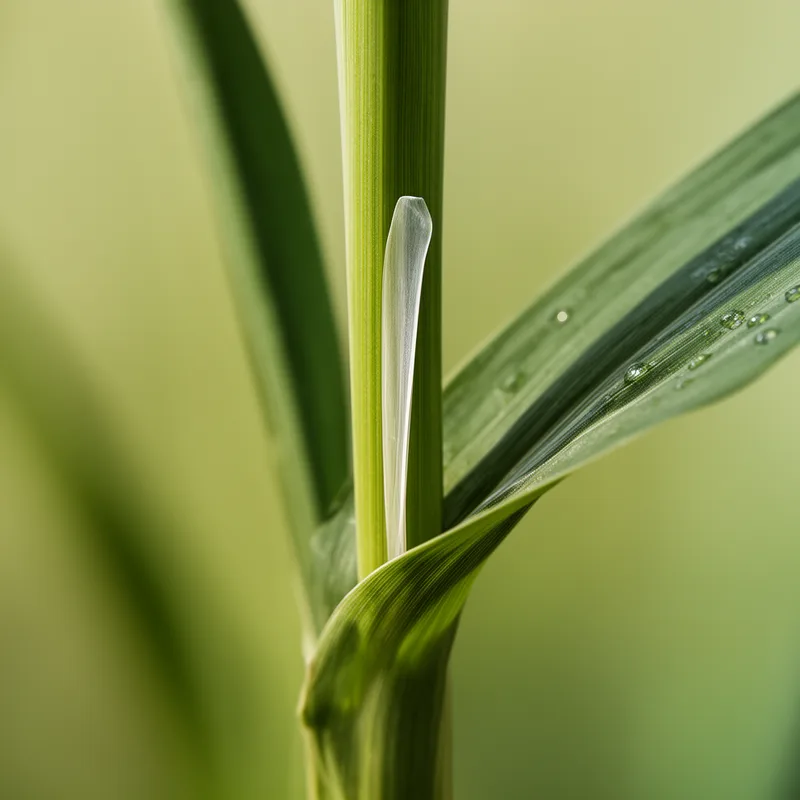
ligule


 1
9.9
A thin, strap-shaped part where a leaf meets the stem
- noun
- /ˈlɪɡjuːl/
- Specialized
:
ligula
- The ligule is crucial for identifying certain grass species.
Examples
-
Botanists examined the ligule to help classify the unknown plant specimen.
-
The grass species can be identified by the shape and size of its ligule.
-
A membranous ligule is present where the leaf blade meets the sheath in many cereals.
-
Some plants have a distinct ligule at the base of their leaves.
-
The ligule of the grass plant helps to distinguish it from other species.
-
Botanists often examine the ligule to identify variations in plant types.
-
In some species of plants, the ligule can be seen clearly at the base of the leaf.
Surface Forms
Etymology
Ligule comes from the Latin ligula, meaning 'little tongue'. So a plant's ligule is a thin, tongue-shaped part where the leaf meets the stem, and thinking of a small tongue helps you remember its shape and place.