
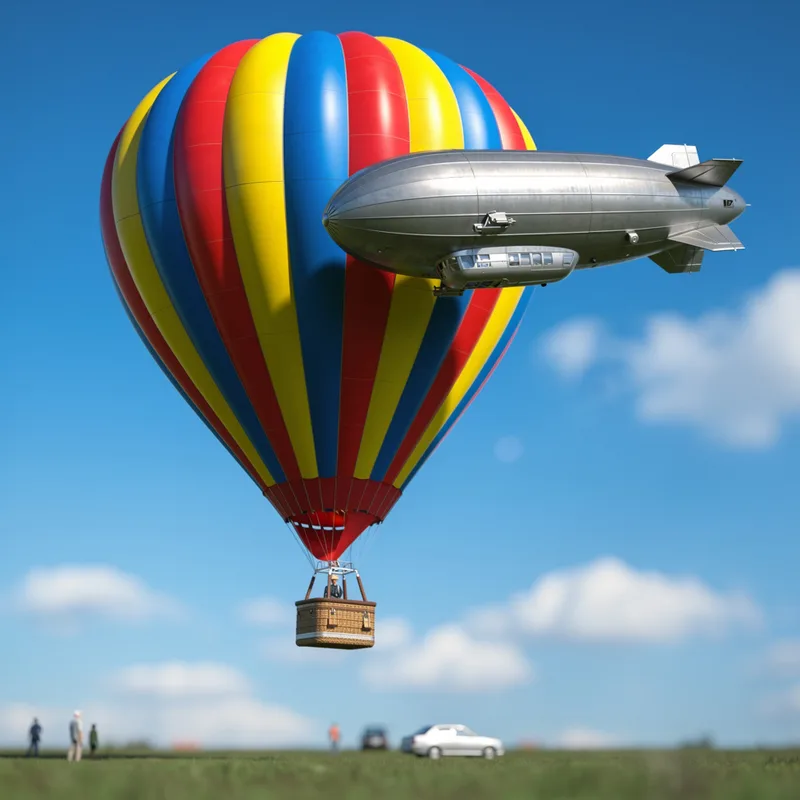
lighter-than-air
 1
6.8
1
6.8

- adjective
- Specialized
- Being lighter than air, methane will rise up and away; logically, it will then take away heat from the surface.
- lighter-than-air craft
- lighter-than-air balloon
- lighter-than-air gas
Examples
-
Scientific missions into the atmosphere began the day the Montgolfier brothers launched the first lighter-than-air balloon in 1783.
Academic text (2004) -
Methane rises because it is lighter than air; carbon dioxide sinks because it is heavier than air.
Blog text (34) -
Balloons rise because they are lighter than air.
Blog text (3) -
Are you still working on that lighter-than-air compound?
-
Helium is lighter than air, so the size depends on the weight of the payload and the altitude it must reach.
Blog text (27) -
The system works like this: Compressed helium is released from nine vessels on the craft, filling the hull and making it lighter than air.
Blog text (10) -
To go up, the pilot releases compressed helium, filling the hull and making the craft lighter than air.
Blog text (10) -
Blimps and balloons are examples of lighter-than-air vehicles that can float in the sky.
-
The lighter-than-air craft rose gracefully, thanks to its helium-filled envelope.
-
Airships are designed to be lighter-than-air, allowing them to soar effortlessly above the ground.
Synonyms
 9
5.3
9
5.3
Able to float in water or rise in air
Antonyms
- Specialized
1
7.1
A flying machine like a plane that must use wings or rotors to lift itself up
How Buoyant
- Specialized
1
6.8

- Specialized
9
5.3
- Specialized
1
7.1
Surface Forms
Morphology
Etymology
Lighter-than-air comes from the simple parts light ('not heavy') and air, so it literally says 'less heavy than air'. That's why lighter-than-air objects like balloons and airships can rise and float — they are lighter than the air around them.