
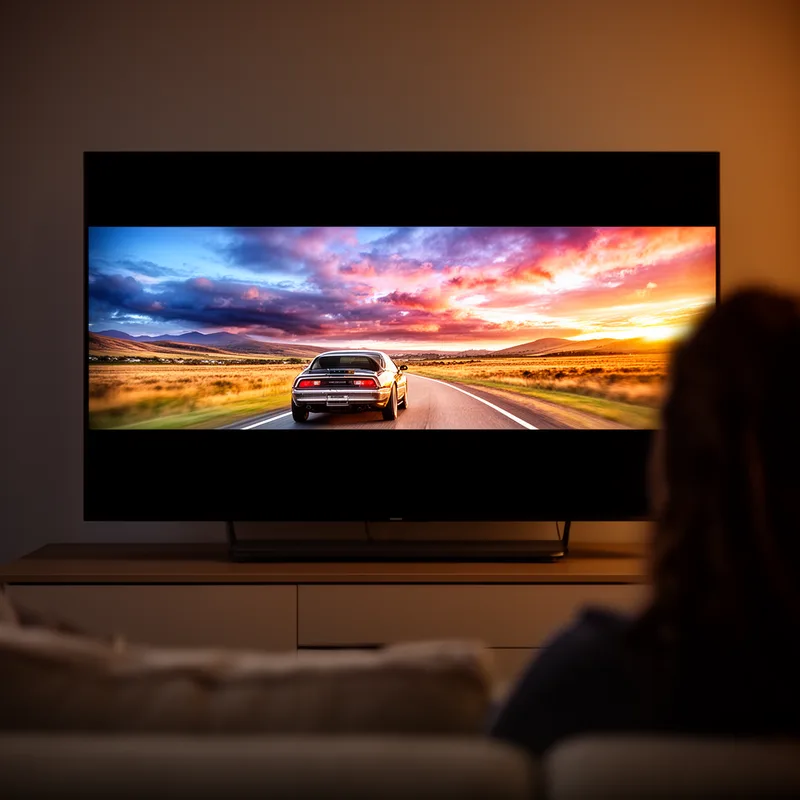
to letterbox
- verb
- /ˈlɛtərˌbɑks/
- Specialized
- Many classic movies are letterboxed on television to preserve their original aspect ratio.
Examples
-
I love how they letterbox classic movies.
-
To ensure the film appears correctly on standard screens, you need to letterbox it by adding black bars at the top and bottom.
-
The streaming service decided to letterbox the film instead of cropping important scenes.
-
Some viewers prefer not to letterbox content, even if it means losing part of the image.
-
The film was letterboxed for television.
-
When converting a widescreen movie for television, it is important to letterbox the image to maintain its intended aspect ratio.
-
If you want to display the movie properly on smaller screens, remember to letterbox the video so that it fits without distortion.
Surface Forms
Morphology
Etymology
To letterbox a movie is to put the wide picture into that same 'letterbox' shape by adding black bars at the top and bottom so the whole width can be seen on a narrower screen. That is why the verb means changing the display to keep the original wide view.

