
leptospirosis
 2
9.9
2
9.9

- noun
- /ˌlɛp.təˈspaɪ.rə.sɪs/
- Specialized
- Viral haemorrhagic fevers such as Ebola are rare in travellers; bacterial infections, such as leptospirosis, meningococcemia, and rickettsial infections, can also cause fever and haemorrhage.
- leptospirosis, a disease
- leptospirosis causes
Examples
-
An international expert on zoonotic diseases, Carole Bolin traced the cause of a human outbreak of leptospirosis in Nicaragua to dogs.
Academic text (2000) -
"There are more than 200 different strains of bacteria that can cause leptospirosis," Bolin explains.
Academic text (1996) -
Their studies show that previous commercial vaccines for cattle have not adequately protected them against some types of leptospirosis.
Academic text (2000) -
For example, in the period following the hurricane, the reported number of cases of cholera, leptospirosis, and dengue increased.
Academic text (2007) -
In cattle, leptospirosis causes abortions, stillbirths, and reproductive inefficiency.
Academic text (2000) -
Leptospirosis is caused by spiral-shaped bacteria called spirochetes (spy-row-keets).
Academic text (2000) -
Reservoirs and vectors for infectious diseases such as dengue, leishmaniasis, and leptospirosis flourish in slums.
Academic text (2016) -
Veterinarian Carole Bolin prepares to inject a cow with the new vaccine for bovine leptospirosis.
Academic text (2000) -
By the time the CDC contacted Bolin, they had ruled out Ebola and identified the problem as leptospirosis, a disease found worldwide that affects domesticated livestock, wildlife, and humans.
Academic text (1996) -
The Maldives reported their first confirmed case of leptospirosis in November 2000.
Synonyms

 1
8.1
1
8.1
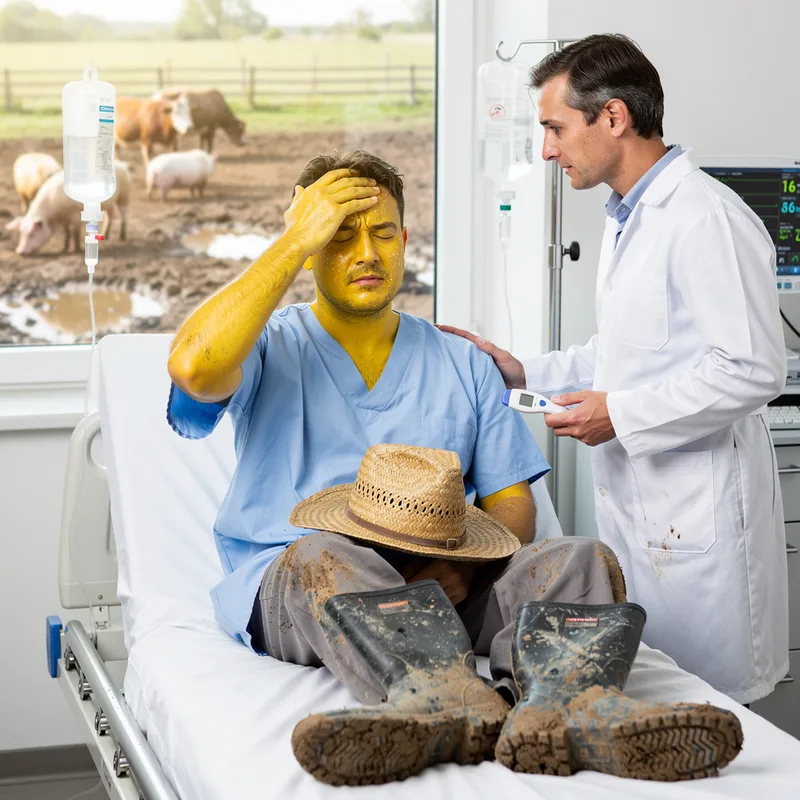
An infection people get from animals that causes fever and yellow skin
Surface Forms
Morphology
leptospirosis = Leptospira (opaque) = leptospira + osis
Formed from the scientific genus name 'Leptospira' plus the medical suffix '-osis'; this is a specialized formation that is not predictable for average learners.
Etymology
The word leptospirosis comes from the bacteria name Leptospira, made from Greek leptos 'thin' and Greek speira 'coil' because the bacteria are very thin and spiral-shaped, and the ending -osis means 'disease'. So leptospirosis is the disease caused by those thin, coiled bacteria.