

lee side
 1
6.3
1
6.3

- noun
- If there's wind, I will find a spot on the lee side of the hill to stay warm.
- lee side of a hill
- lee side of the island
Examples
-
Both forms cause accumulation of snow on their lee sides, thereby playing a large role in the wind's redistribution of snow across this terrain.
Academic text (2001) -
Bands of a few dozen long-haired nags huddled here and there in the draws and on the lee side of the small hills, where the snow was less deep.
Fiction book (1997) -
We've had to move to the lee side on account of the storm.
-
On a Saturday, half a day working; unwilling to go home, he takes a fishing line to the island's lee side.
Fiction book (1997) -
Reef the sail and let's start rowing toward the lee side of the island.
Fiction book (1991) -
He got out the foam pad and propped it with his boots against the lee side of the car.
Fiction book (1991) -
Cecil dwelt in a spacious, well-constructed shed on the lee side of the tower.
Fiction book (1995) -
She had taken the Prinzess Lisa-Marie downwind to escape Port Myrine, then worked her way back up the lee side of the Archipelago.
Fiction book (1998) -
On a stormy day, we set up our tents on the lee side of the large boulder for protection.
-
Many birds can be seen resting on the lee side of the trees during strong winds.
Synonyms
 2
7.4
2
7.4
The area on the side of something that is protected from the wind
 2
6.9
2
6.9
The side away from the wind that is protected from it
 1
5.9
1
5.9
The side of something protected from the wind
Antonyms
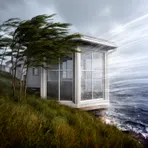
How Sheltered


Surface Forms
Morphology
The meaning is directly compositional: 'lee' already denotes the wind-sheltered side and 'side' names a surface or flank, so combining them yields the sheltered side. Although 'lee' is somewhat specialised vocabulary, the semantic relationship is transparent and cross-linguistically common, so a B1 learner who knows both constituents would readily infer the MWE meaning.
Etymology
Lee side comes from old sailors who called the part of a ship that was out of the wind the lee and the side showed which side it was. If you stayed on the lee side, you were sheltered from the wind, so the phrase means 'the side sheltered from the wind'.