
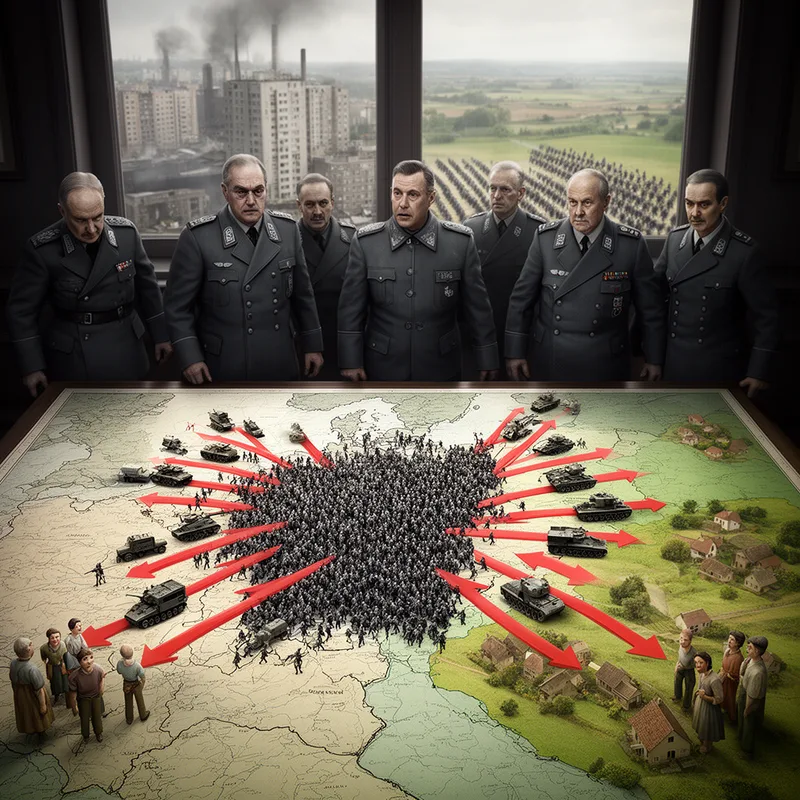
lebensraum
 1
9.9
1
9.9

- noun
- /ˈleɪbənzˌraʊm/
- Offensive
- For geopolitikers, every large state needed Lebensraum (literally, living space) or room to expand.
- lebensraum (living space)
Examples
-
The idea of lebensraum was central to Nazi ideology, advocating for territorial expansion to accommodate the nation's needs.
-
The raving anti-Bolshevik in Berlin, author of his own dreams of vast Lebensraum for the German people in the east, was then suddenly master of all the resources of the continent west of the Soviet border, as well as of the most successful army in the world.
Academic text (1992) -
Only thus shall we gain the living space (Lebensraum) which we need.
Blog text (11) -
Germany's economic Lebensraum was obtained in the end by the private arts of peace, not by the public arts of war.
Blog text (2) -
China has no intention of occupying the US, nor do they need Lebensraum here.
Blog text (19) -
Hitler envisioned Lebensraum to the East so much that he referred to Ukraine as Germany's India (Crozier 1988, 272).
Academic text (1990) -
After the rise of the Nazis, the Grenzschutzdienst was smoothly integrated into the Reich and became an important channel for disseminating the ideology of Lebensraum and Aryan identity.
Academic text (2003) -
Lebensraum was equated with "migrationist colonialism," while economic imperialism, which viewed colonies mostly as resource peripheries, was termed Weltpolitik.
Academic text (1990) -
Hitler's expansionist policies aimed to secure lebensraum for the growing German population in Eastern Europe.
-
Many historians analyze how the concept of lebensraum justified aggressive military actions during World War II.
Synonyms
 4
9.3
4
9.3
Land a country wants to take for its people to live and grow
 3
7.5
3
7.5
A policy by a country to gain more land or power
Surface Forms
Etymology
Lebensraum is a German word made of two parts: Leben means 'life' and Raum means 'space', so it literally means 'living space'. In history it was used to say a nation needed more land for its people, and it became linked to Nazi policy of taking territory before and during World War II.