
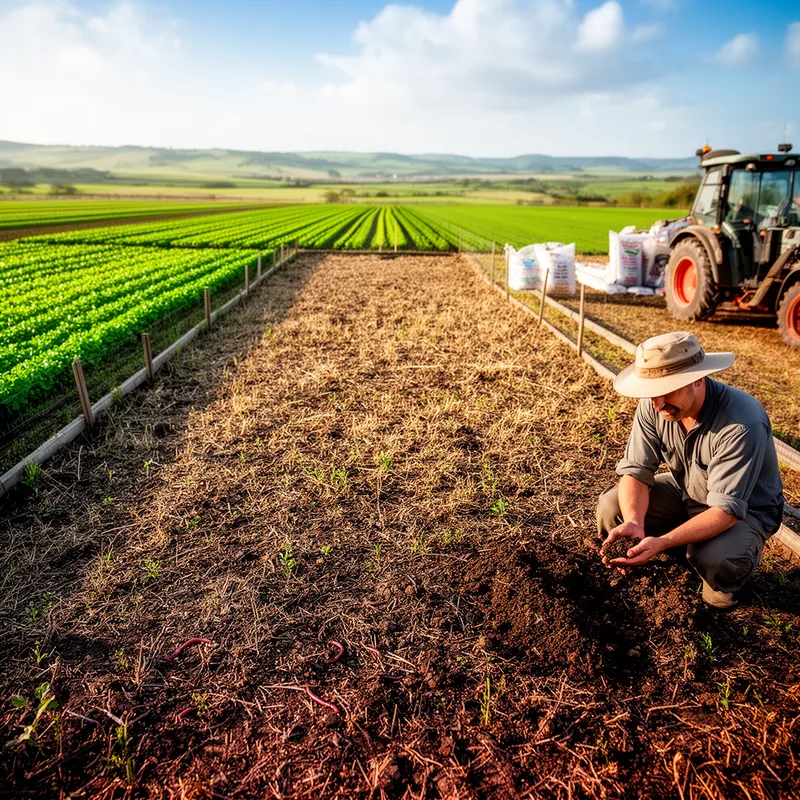
to leave the field fallow
- phrasal verb
- Specialized
- By deciding to leave the field fallow, the farmer allowed the soil to regain its fertility for future crops.
Examples
-
The best rotations they found usually lasted 3 or 4 years, such as growing wheat the first year, corn the second, and then leaving the field fallow for the third.
Academic text (2005) -
Leaving the field fallow hurts the soil by decreasing its organic matter while increasing the likelihood of erosion.
Academic text (2005) -
Farmers often leave the field fallow for a season to restore its nutrients.
-
To improve crop yield, many agricultural experts recommend that farmers leave the field fallow after several years of planting.
Synonyms

To leave land unplanted for a time so the soil recovers
Antonyms


How Cultivated

Surface Forms
Morphology
The meaning is directly compositional: 'leave' (to cause to remain), 'field' (plot of land) and 'fallow' (to refrain from sowing) combine to mean refraining from cultivating a field so it can recover. This agricultural logic is transparent and cross-linguistically common, so a B1 learner who knows the constituents will understand the MWE.
Etymology
Leave the field fallow comes from farming: a farmer would leave a field fallow, meaning not planting anything so the soil can rest and recover. So, it means 'to stop using land for a time so it can recover its fertility'.