
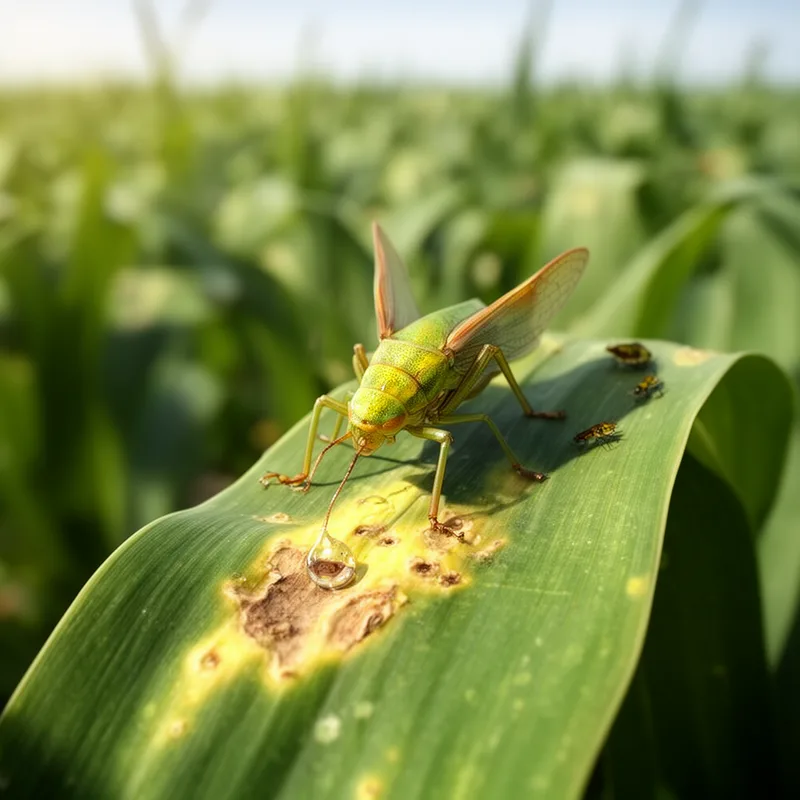
leafhopper


 1
8.2
1
8.2
- noun
- /ˈliːfˌhɒpər/
- Specialized
- Leafhoppers are known to transmit viruses that can devastate tomato and cucumber plants.
- leafhoppers and bugs
- leafhopper insect
- black-faced leafhopper
Examples
-
Farmers often struggle with leafhoppers because they can quickly damage their fields.
-
In May, the researchers used their new test to sample hundreds of leafhoppers, squash bugs, and other insects.
Academic text (1997) -
So a variety of alfalfa may be unappetizing to one leafhopper but tasty to another.
Academic text (1995) -
The researchers' next step will be to start monitoring the leafhoppers' movements, feeding behavior, and geographic distribution.
Academic text (1997) -
That information could give growers an edge in staving off a leafhopper-caused outbreak.
Academic text (1997) -
Known to scientists as Homalodisca coagulata, the lively leafhopper is now set to attack other grape-growing regions in the Golden State as well.
Academic text (2001) -
In addition to leafhoppers and squash bugs, they also looked at aphids, which tap into the plant's sweet, rich sap.
Academic text (1997) -
Leafhoppers (Cicadellidae) were also well represented at 42 species, comprising 22% of the Hemiptera.
Academic text (2010) -
The scientists' chief suspect is a little-known species of leafhopper, a winged insect that can easily infect plants with the microorganism as it probes for sap.
Academic text (1997) -
The leafhopper sucks the sap from plants, harming crops in the process.
Synonyms
A group of small jumping insects called leafhoppers that often harm crops
Surface Forms
Morphology
Etymology
Leafhopper is made of two English words: leaf meaning 'leaf' and hopper from hop meaning 'to jump', like in grasshopper. So a leafhopper is literally a small insect that 'jumps' on leaves and sucks plant sap, which explains why it can damage crops.