

lead tree
- noun
- The lead tree produces long pods that are used as animal fodder in many tropical regions.
Examples
-
Some gardeners value the lead tree for its rapid growth and attractive, feathery foliage.
-
Farmers often plant lead trees for soil improvement.
-
Farmers often plant lead tree to provide shade and improve soil fertility in their fields.
-
The lead tree is known for its feathery leaves.
-
Farmers often plant lead tree to provide shade and improve soil fertility in their fields.
-
The lead tree produces long pods that are used as animal fodder in many tropical regions.
-
Some gardeners value the lead tree for its rapid growth and attractive, feathery foliage.
Synonyms
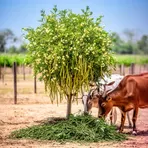
A small bushy tree with yellow-white flowers and long seed pods that farmers grow for animal fodder
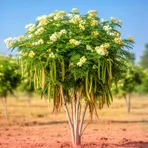
A low scrubby tree from warm countries with white or yellow flowers and long flat seed pods
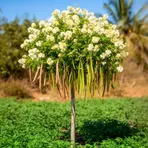
A small tree with white flowers with some yellow and long flat pods that grows in warm places
Surface Forms
Morphology
This is a lexicalized plant name: the word 'lead' here does not transparently refer to the metal and does not describe an obvious property of the tree, so a B1 learner who knows 'lead' (the element) and 'tree' would not be able to infer the specific botanical meaning. The compound is essentially an arbitrary name for a species (Leucaena leucocephala), making the overall meaning unpredictable from its parts.
Etymology
Lead tree may come from the way its long, flat seed pods hang from the branches like thin bars of lead, so people thought of the heavy metal. That's why the name stuck to this fast-growing tree that gives long pods for 'animal food' and helps improve the soil.

