
lead arsenate
- noun
- /lɛd ˈɑːrsəneɪt/
- Archaic
- In the 1950s, when lead arsenate pesticides were used heavily on tobacco farms, arsenic concentrations were recorded as high as 1.4g per cigarette.
- use lead arsenate
Examples
-
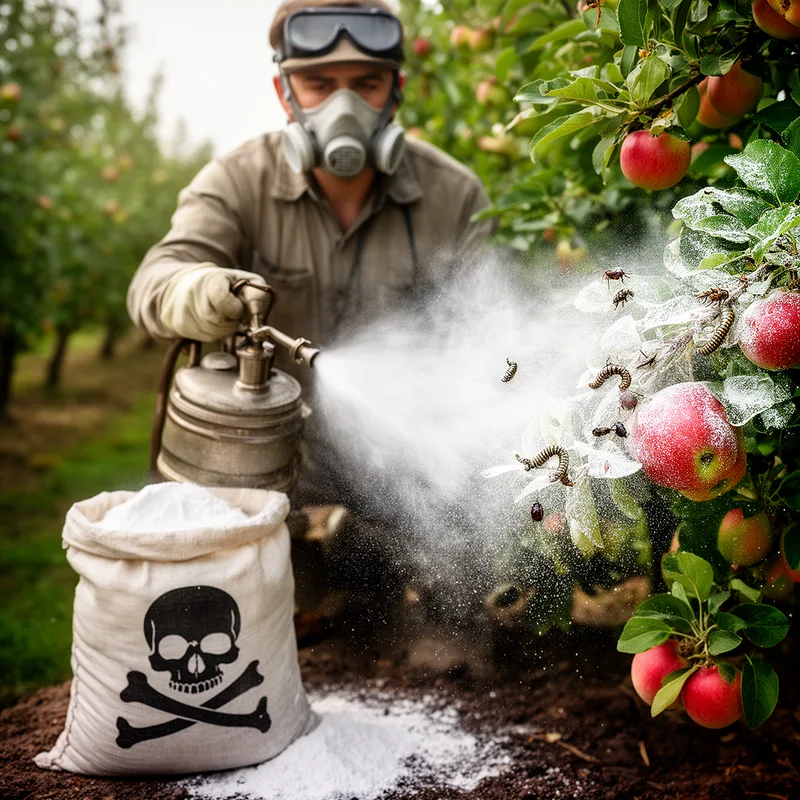
Lead arsenate was commonly used as an insecticide lead arsenate until its dangerous effects were discovered.
-
Farmers applied lead arsenate to control pests, but it was later banned due to its harmful properties.
-
In earlier agricultural practices, lead arsenate served as a potent pesticide before its toxicity was recognized.
Surface Forms
Morphology
The name 'lead arsenate' is transparently compositional: it combines the metal 'lead' with the anion 'arsenate', so a learner who knows both constituents can infer it is a chemical compound made of lead and arsenic. This follows regular chemical naming patterns (metal + oxyanion) that are predictable across languages, so the core meaning is derivable even if specific details (formula, toxicity, historical use) require extra knowledge.
Etymology
Lead arsenate is made from two words: lead and arsenate, with arsenate coming from the poisonous element arsenic. Farmers once dusted fruit trees with this white powder to kill insects, so the name today refers to that 'poisonous' insecticide.

