
Laurasia


 1
9.9
- proper noun
- /lɔːˈreɪʒə/
- Specialized
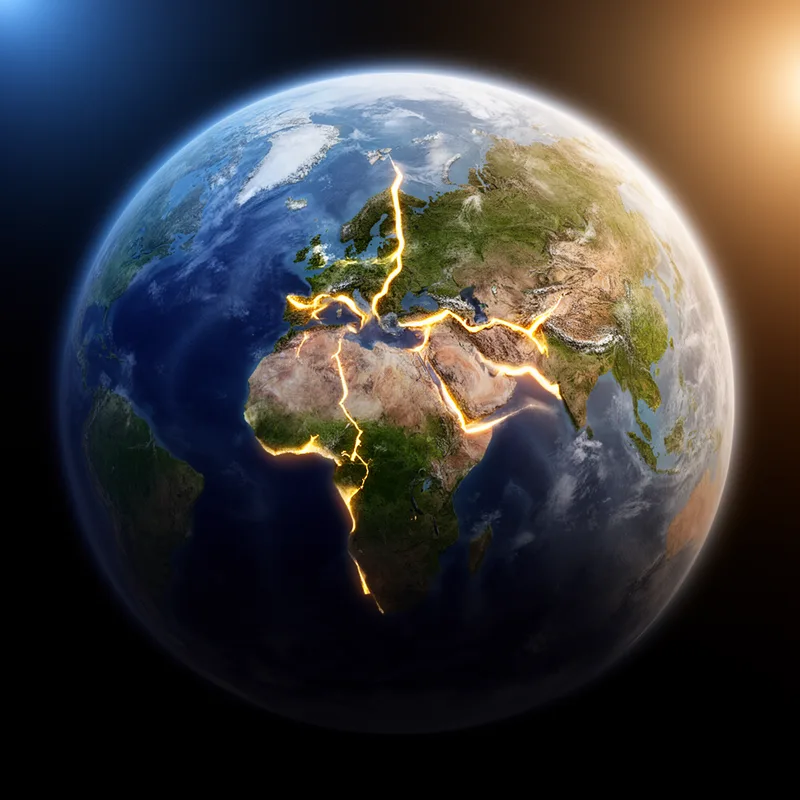
- During the Mesozoic era, Laurasia was a massive landmass that eventually fragmented into present-day North America, Europe, and Asia.
- Laurasia and Gondwana
Examples
-
Intriguingly, the split appears to coincide with the breakup of Pangaea into two supercontinents, Laurasia and Gondwana.
Academic text (2006) -
"Once the Tethys Ocean, which used to lie between the ancient continents of Gondwana and Laurasia, had disappeared as oceanic crust north of India subducted beneath Asia, there was no more volcanism of this type.
Blog text (21) -
During the same period, Laurasia lay across the Northern Hemisphere, but later split into North America and Eurasia.
Academic text (2009) -
Mammals diversified as Pangea continued to break apart, first into a northern supercontinent, Laurasia, and a southern one, Gondwana.
Academic text (2009) -
Maps of continental locations over geologic time show the closing of the Tethys Sea between Laurasia and Gondwanaland by the northwest movement of Africa and India over the past 225 million years.
Academic text (2003) -
Most of the early diversification of iguanians took place on Gondwana, the southern continent, whereas most of the early diversification of scleroglossans took place on Laurasia, the northern continent.
Academic text (2006) -
In the geological history of Earth, Laurasia refers to the supercontinent that formed in the Northern Hemisphere before splitting into several continents.
-
Many fossils found in Laurasia provide evidence of the diverse prehistoric life that existed before the continents drifted apart.
Surface Forms
Etymology
Laurasia was formed by joining two place names: Laurentia, an old name for the North American land, and Asia, the large continent. So Laurasia simply means the 'combined northern land' that included North America and much of Eurasia.