

laughing gas
 4
4.0
4
4.0

- noun
- /ˈlæfɪŋ ɡæs/
- Specialized
- Many patients prefer using laughing gas in the dentist's office because it makes the experience less stressful.
- nitrous oxide (laughing gas)
- laughing gas (nitrous oxide)
Examples
-
I was feeling anxious about the dental procedure, but the dentist offered me laughing gas to help me relax.
-
But they also use laughing gas and pain medicine.
-
Would you rather just have the laughing gas?
-
You gave me laughing gas.
-
Do dentists still really use laughing gas?
Blog text (30) -
I've had laughing gas, and in my experience, it wore off rather quickly.
Blog text (24) -
The synthetic form of N2O is the "laughing gas" used by dentists as an anesthetic.
Academic text (1997) -
After inhaling the laughing gas, I felt a sudden wave of euphoria and laughter started to bubble up.
Synonyms
 5
4.6
5
4.6
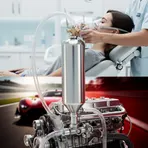
A colourless gas with a sweet smell that makes people relax during medical treatment and boosts engines
Surface Forms
Morphology
The phrase is compositionally built from 'laughing' (causing laughter) + 'gas' (a gaseous substance), so a learner who knows both words can infer it refers to a gas that induces laughter. Cross-linguistically similar names (e.g. 'gas de la risa', 'gas hilarante') and the straightforward modifier-noun structure make the basic meaning transparent even if the specific chemical name (nitrous oxide) is not known.
Etymology
The name laughing gas comes from early public shows where people who breathed the gas began laughing, so people described it as a gas that made you 'laugh'. That's why today laughing gas means the gas dentists use to help patients relax and feel less pain.