
latifundia


 1
9.9
- noun
- /ˌlætɪˈfʌndiə/
- Specialized
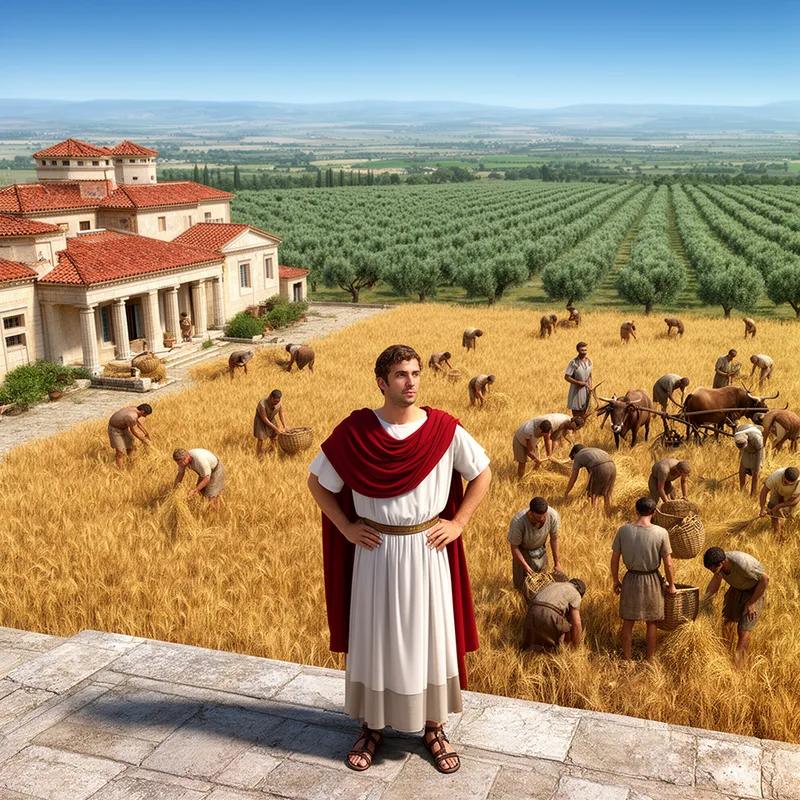
- The problems that giant latifundia farmed by slaves bring to a society aren't mentioned at all.
Examples
-
Many historians study the impact of latifundia on the economies of ancient civilizations.
-
That was the development of vast latifundia for the raising of beef cattle in the Western United States and in Argentina.
Academic text (2004) -
Concerning the second question, it becomes evident that increased water availability in the valley has led to the expansion of latifundia onto properties not previously agriculturally integrated.
Academic text (1994) -
In the South, in the Kingdom of the Two Sicilies, the Bourbon dynasty ruled over an economy based upon latifundia and organized on a feudal system of labor relations.
Academic text (1993) -
The problem was the steady depopulation of the rural countryside of freehold farmers (the source of military recruits) and their replacement by slave-operated latifundia.
Blog text (19) -
Neoliberalism is basically admitting, in a nutshell, that feudalism—such as what formed from the development of the Roman rentier class and its latifundia—is ultimately inescapable.
Blog text (2) -
The extensive latifundia in ancient Rome relied heavily on slave labor to cultivate crops.
-
In Latin America, latifundia often led to significant social and economic inequalities.
Synonyms
 1
9.1
A large ranch in South America where people raise cattle
How Big

Surface Forms
Etymology
Latifundia comes from Latin parts lati- meaning 'wide', seen in latitude, and -fundia from fundus meaning 'farm' or 'land', like fund. So latifundia literally means 'wide farms' and refers to very large agricultural estates, often worked by many laborers.