
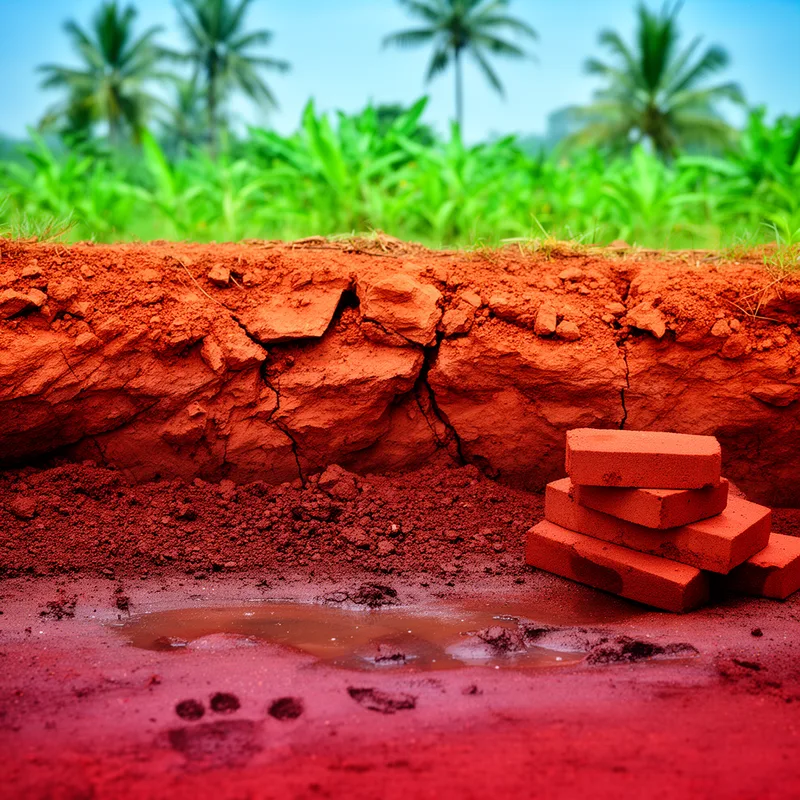
laterite


 1
9.9
- noun
- /ˈleɪtəˌraɪt/
- Specialized
- The best country roads in Africa are covered with laterite, an iron-based reddish material that creates a hard, smooth surface.
Examples
-
Farmers in southern India often cultivate their crops in fields with laterite soil, known for its high iron content.
-
A walk across Bukit China reveals the ruddy color of highly eroded laterite, barely covered by grasses.
Academic text (1993) -
According to geographers, roughly 75 percent of soil in Liberia is composed of laterite or small stones.
Academic text (2004) -
It is also significant that the Esu shrine is usually made from laterite soil or clay.
Academic text (2000) -
Phu Loi billeted 10,000 soldiers, and Company A built and maintained the base facilities like the airfield, originally constructed of laterite clay by the Japanese during World War II.
Academic text (2011) -
West African soils also contain large concentrations of laterite (tiny stones) which render them highly susceptible to leaching, a process that results in the further loss of nutrients.
Academic text (2004) -
The path through the jungle was made of reddish laterite, which gave it a distinct appearance in the tropical landscape.
-
In many tropical regions, laterite forms as a byproduct of rock decomposition, creating nutrient-rich soil for plants.
Surface Forms
Etymology
The word laterite comes from the Latin root later, which means 'brick'. This reddish tropical soil often hardens into brick-like blocks that people use for building, so the name tells us about its brick-like quality.