
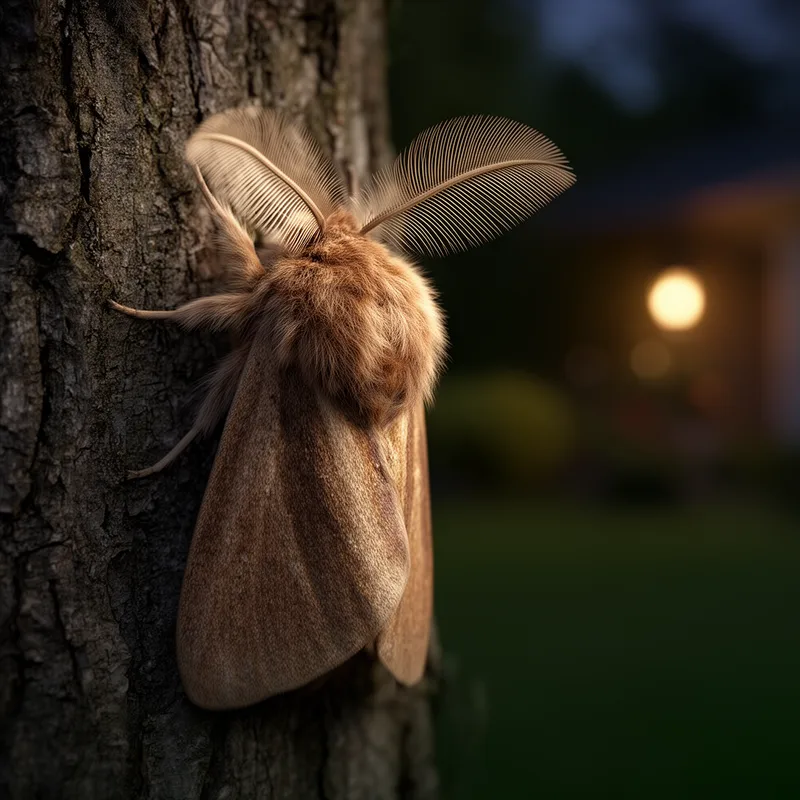
lasiocampid moth
- noun
- /ˌleɪziˈoʊkæmpɪd mɔθ/
- Specialized
- The lasiocampid moth is easily recognized by its stout, hairy body and feathery antennae.
Examples
-
Many lasiocampid moths are active at night and attracted to lights in suburban gardens.
-
A naturalist photographed a rare lasiocampid moth resting on a tree trunk during the summer.
-
The lasiocampid moth is often found in wooded areas.
-
Have you ever seen a lasiocampid moth before?
-
A naturalist photographed a rare lasiocampid moth resting on a tree trunk during the summer.
-
Many lasiocampid moths are active at night and attracted to lights in suburban gardens.
-
The lasiocampid moth is easily recognized by its stout, hairy body and feathery antennae.
Synonyms

 71
1.0
71
1.0

An insect like a butterfly that flies at night, often with feathery antennae
A medium, stout moth with comb-like antennae and dull colors
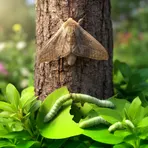
A medium-sized hairy moth with caterpillars that feed on leaves
Surface Forms
Morphology
This is a straightforward noun–noun composition where 'lasiocampid' names a particular group/type and 'moth' names the broader insect; together they mean 'a moth of the lasiocampid group'. The meaning is fully compositional and follows common taxonomic modifier patterns in English (and many languages), so a learner who knows both constituents can derive the MWE meaning.
Etymology
The name lasiocampid moth may come from old Greek words meaning 'hairy' and 'caterpillar', because both the moth and its caterpillar are very furry and thick-bodied, so the name helps you picture a stout, hairy insect.