

lasiocampid
- noun
- Specialized
- The lasiocampid rested quietly on the bark, its neutral coloring blending into the background.
Examples
-
The distinctive comb-like antennae are a key feature of a typical lasiocampid.
-
The lasiocampid moth is often found in wooded areas.
-
Many lasiocampids are active at night and attracted to lights.
-
Many lasiocampids are attracted to light at night.
-
The lasiocampid moth is often found in wooded areas, where it blends in with the bark.
-
Many lasiocampids are active at night, flying around lights to find mates.
-
The distinctive comb-like antennae are a key feature that helps identify a lasiocampid.
Synonyms
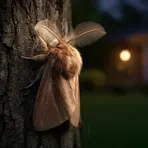
A medium-sized moth with a thick, hairy body and feathery antennae
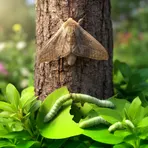
A medium-sized hairy moth with caterpillars that feed on leaves
Compounds
Surface Forms
Morphology
lasiocampid = Lasiocampidae (opaque) = lasiocamp + id
Formed from specialized taxonomic combining forms plus the technical suffix '-id', which is unlikely to be interpretable by an average learner.
Etymology
Lasiocampid comes from Greek parts meaning 'hairy' (lasio-) and 'caterpillar' (-camp-), and the ending -id marks a member of that group. So the name helps you remember these moths are tied to hairy, woolly caterpillars and often have thick, fuzzy bodies as adults.

