
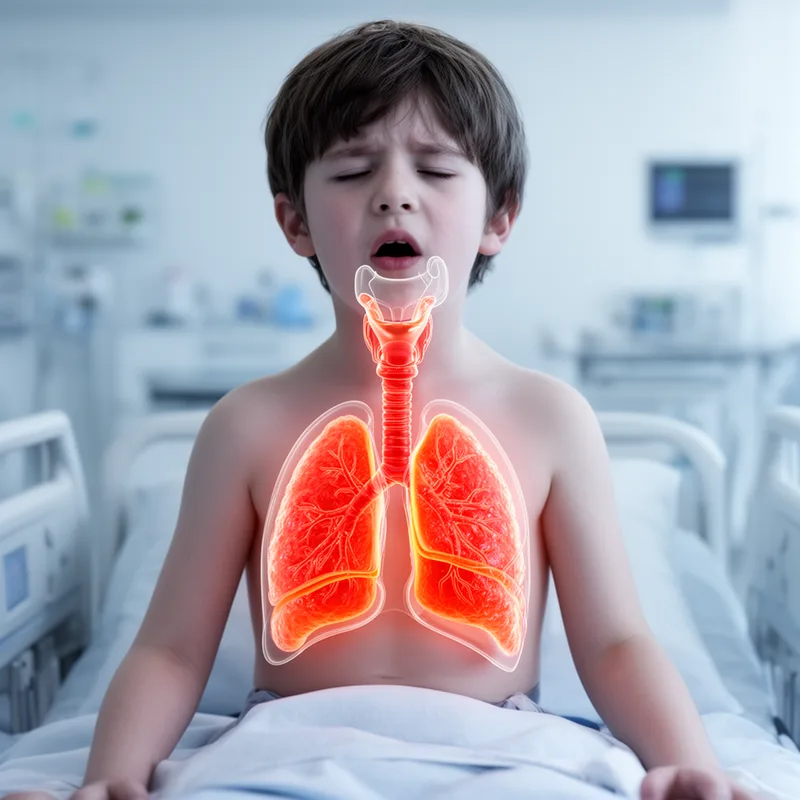
laryngotracheobronchitis
- noun
- /ˌlɛrɪŋgoʊtrəˌkeɪoʊˌbrɒŋˈkaɪtɪs/
- Specialized
- The doctor diagnosed the child with laryngotracheobronchitis after observing a harsh, barking cough.
Examples
-
Because laryngotracheobronchitis can affect breathing, children with severe symptoms may require hospitalization.
-
Steroid treatments are often used to reduce airway swelling in cases of laryngotracheobronchitis.
-
The child was diagnosed with laryngotracheobronchitis last week.
-
Many children suffer from laryngotracheobronchitis during the winter months.
-
The doctor diagnosed the child with laryngotracheobronchitis after observing a harsh, barking cough that indicated serious airway inflammation.
-
Steroid treatments are often used to reduce airway swelling in cases of laryngotracheobronchitis, allowing for easier breathing.
-
Because laryngotracheobronchitis can cause significant breathing difficulties, it is important to monitor affected children closely.
Antonyms



Surface Forms
Morphology
laryngotracheobronchitis = larynx + trachea + bronchus (semi-transparent) = laryngo + tracheo + broncho + itis
The term is a straightforward medical formation meaning inflammation (-itis) of larynx, trachea, and bronchi, but uses specialized combining forms and a technical compound that may not be obvious to non-medical learners.
Etymology
The word laryngotracheobronchitis is built from parts that name three airway areas plus the ending -itis: laryngo- 'voice box', tracheo- 'windpipe', broncho- 'air tubes', and -itis 'inflammation'. So it literally means inflammation of those airways—much like a mix of laryngitis and bronchitis—which explains why it causes breathing problems.