
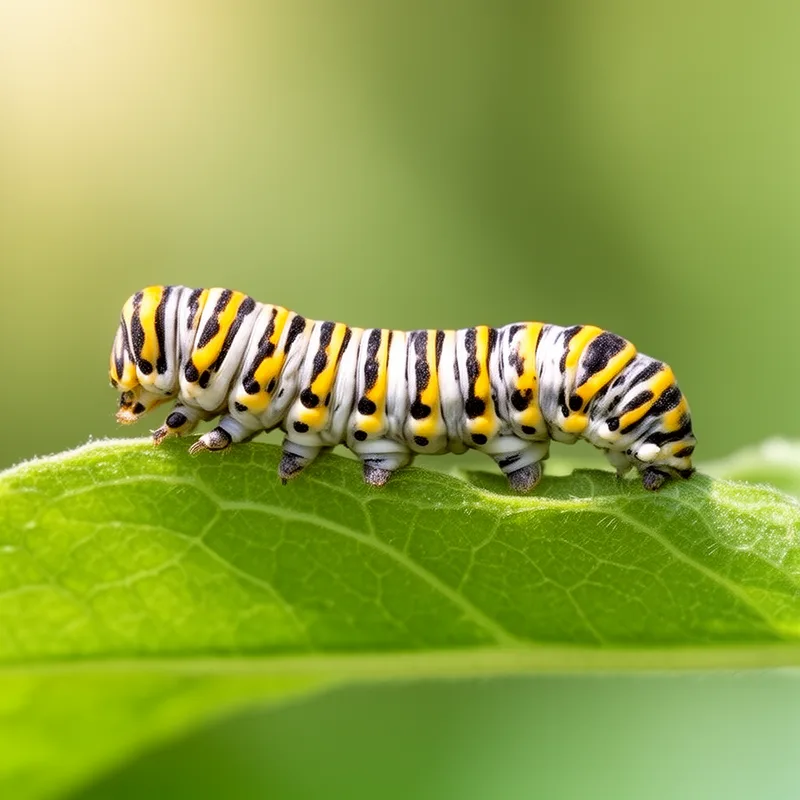
larva
 16
5.1
16
5.1

- noun
- /ˈlɑrvə/
- Specialized
- Research suggests that they begin life as small larvae birthed from eggs in a deep desert nesting site.
- wasp larva
- weevil larva
- cabbage looper larva
Loading YouTube…
Watch on YouTubeIt is actually this fluid produced by the larvae of Hornets.
- It is actually this fluid produced by the larvae of Hornets.
- That is, this is what they look like as larvae.
- Well, these parasitic Wasps specifically seek out your fly larvae.
- I don't wanna give you too many spoilers, but those things that work, you wanna affect the soil to kill off the eggs and the larva as well as the adults.
- And the answer is, well, an awful lot of animals eat mosquitoes either as flies or as larvae in water.
- The larvae, most Ant larvae, so Ant larvae don't have any developed mouth parts, so they need to be fed.
- And eventually it gets to the point where there's, there's too many workers and they even start eating their own larvae.
Examples
-
So on the right here is the larva of shellfish, and on the left is a planular larva of a coral.
-
Subsequent sequencing found that each larva had a unique mtDNA sequence.
Academic text (2009) -
Their larva gives off light.
-
And remember, this is just a larva.
-
As the ants attempt to attack a larva, the larva turns the tables.
Academic text (1993) -
OK, Stevie, we know these are larva of some sort.
-
For weeks, I was surrounded by all kinds of organisms, larvae of all sorts.
-
When the coast is clear of defending ants, the larva begins to feast on the ant brood.
Academic text (1993) -
Above: On the left, a larva of Cataclysta camptozonale feeds on climbing fern leaves.
Academic text (2000) -
The caterpillar eventually transforms into a butterfly after its time as a larva.
How Mature

Surface Forms
Etymology
The word larva comes from the Latin larva, which meant 'ghost' or 'mask'. Scientists used that image because a larva is a young, different-looking stage that seems 'masked' or hidden until it changes and becomes the adult.