
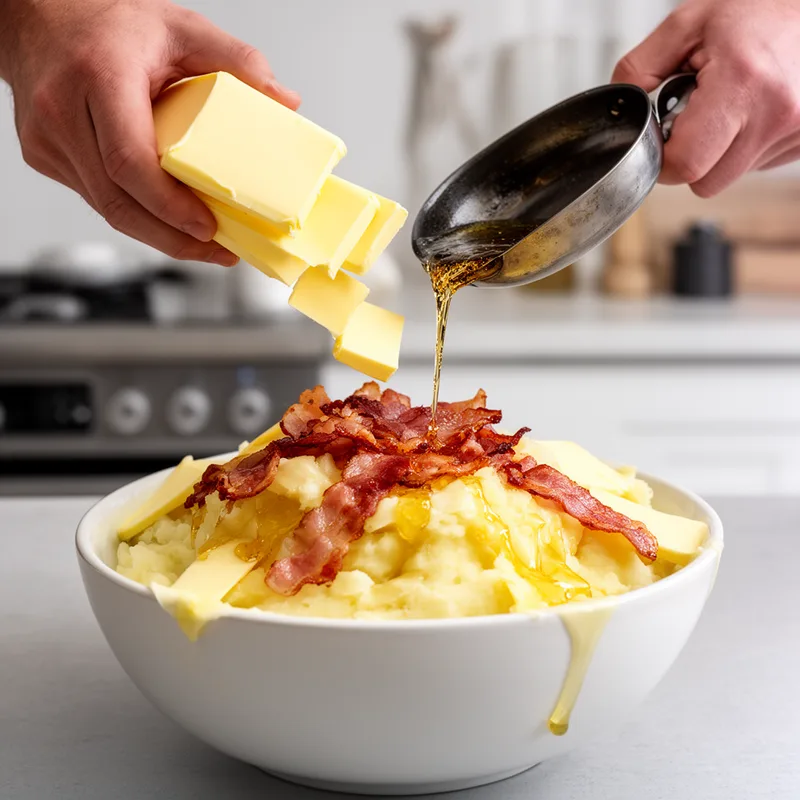
to lard up
- phrasal verb
- /lɑrd ʌp/
- For a richer flavor, it's common to lard up the vegetables with some olive oil and spices.
Examples
-
Everything gets larded up and fried.
Blog text (12) -
To make the dish more flavorful, the chef decided to lard up the chicken with herbs and butter.
-
The recipe suggested that you should lard up the meat before roasting it to enhance its taste.
Synonyms


 1
6.9
1
6.9
To add fat to meat or pastry to keep it moist during cooking

Make something richer by adding fat or extra things that are not needed

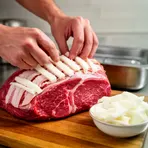
To insert thin strips of fat into meat to add flavor and moisture
Antonyms

How Rich

Surface Forms
Morphology
The meaning 'to add fat or rich flavor' is directly derivable from combining 'lard' (to insert/add fat) with the particle 'up' (to increase or intensify). The verb+up construction is a common, compositional pattern in English, so a B1 learner who knows both constituents should be able to infer the MWE meaning.
Etymology
Lard up comes from a kitchen image: cooks would push pieces of lard (animal fat) into meat or spoon fat on top of a dish to make it richer. So, to lard up now means 'to add a lot of fat or rich flavor', often making food too greasy.