

land mass
 12
2.8
12
2.8

- noun
- /lænd mæs/
- It's the joining of two land masses.
- land mass on Earth
- percent of the land mass
- largest land mass
Loading YouTube…
Watch on YouTubeIf sea levels can rise and undersea volcanoes erupt to create new land masses, does that mean Earth is gradually becoming a bigger sphere over time?
- If sea levels can rise and undersea volcanoes erupt to create new land masses, does that mean Earth is gradually becoming a bigger sphere over time?
- And as they do that, more and more land masses manifest.
- Asia does not narrow anything down that is is a massive region, so somewhere in approximately half of the land mass of the world.
- You have the land mass, which is a great thermal mass source to to absorb energy and most of that has snow on it.
Examples
-
Williams Island was one of hundreds of tiny land masses that made up the Bahamas.
Fiction book (2002) -
You're looking at a solid white land mass with ice, snow.
-
Because Canada has the second largest land mass on Earth after Russia and like nobody lives there.
-
In the winter land masses cool out faster, and in the summer they heat up faster than water.
-
With less than 1 percent of the US land mass, Hawaii is home to more than 30 percent of the nation.
Academic text (2000) -
The land masses of the Earth have nearly reached their present positions.
-
I believe the Earth's surface is approximately 29% land mass and 71% covered by water.
Blog text (22) -
The polar bear is found mainly in the Arctic Circle and the adjacent land masses as far south as Newfoundland island.
-
Seven-eighths of the Earth's land mass will be deluged with hot magma.
Fiction book (1997) -
Brazil occupies almost half of South America's land mass and is the fifth largest country in the world.
Synonyms
 25
5.6
25
5.6
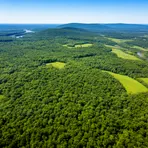
A large area of land not divided into smaller parts
 7
3.4
7
3.4
A large connected area of land that is part of the Earth
 6
4.1
6
4.1
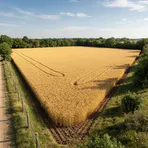
A large area of land used for a certain purpose
 5
2.7
5
2.7
A piece of land used for a specific purpose like building or farming
How Big

Surface Forms
Morphology
The meaning 'a large, continuous area of land' is directly and transparently derived from combining 'land' (area of earth) with 'mass' (a large bulk or accumulation). This straightforward noun+noun composition follows common compounding patterns across languages, so a B1 learner who knows both constituents would readily infer the MWE meaning.
Etymology
Land mass gives the image of a big, solid mass of land — a single chunk of ground that is not cut by water. That's why it means 'a large, continuous area of land'.