
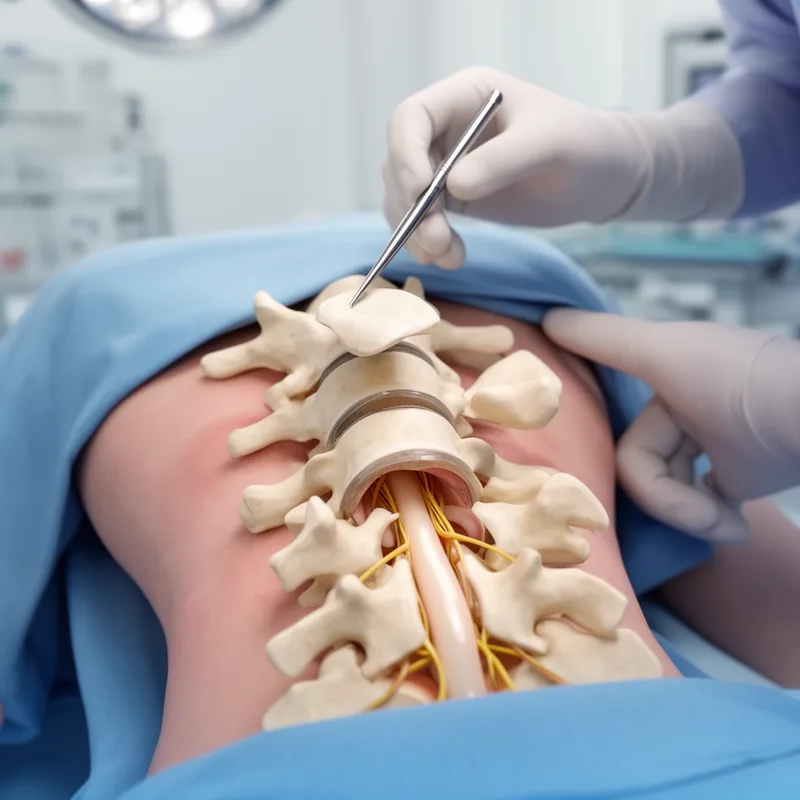
laminectomy
 1
9.9
1
9.9

- noun
- /ˌlæməˈnɛktəmi/
- Specialized
 :
laminectomía
:
laminectomía
- The doctor explained that a laminectomy is performed to relieve pressure on the spinal cord.
Examples
-
A single-level lumbar laminectomy/discectomy will have an estimated blood loss of 100-300 mL.
Academic text (2005) -
After my laminectomy, my recovery focused on physical therapy to strengthen my back.
-
The surgery is called a laminectomy: removing bone.
Blog text (3) -
Simple laminectomy is the least invasive.
Academic text (1997) -
First, what is the normal stay at the hospital after a lumbar laminectomy?
Blog text (27) -
Ligaments and muscles are moved, and the laminectomy is performed.
Academic text (2005) -
I required emergency spinal surgery (laminectomy and discectomy) and was unable to walk at all for a short period (last winter).
Blog text (3) -
In late November, Muncie underwent a laminectomy, a procedure that enlarges the spinal canal to relieve pressure on the spinal column or pinched nerves.
Blog text (7) -
Following a laminectomy, the patient felt significant relief from nerve pain in their legs.
How Invasive
- Specialized
1
4.3

- Specialized
1
9.9
32
3.0
- Specialized
26
3.2
Surface Forms
Morphology
Etymology
Laminectomy comes from lamina, meaning 'thin plate', and -ectomy, meaning 'cut out', the same ending you see in appendectomy. So a laminectomy is the cutting out of the thin bony plate on a bone of the spine to relieve pressure on the spinal cord or nerves.