
lady's thistle
- noun
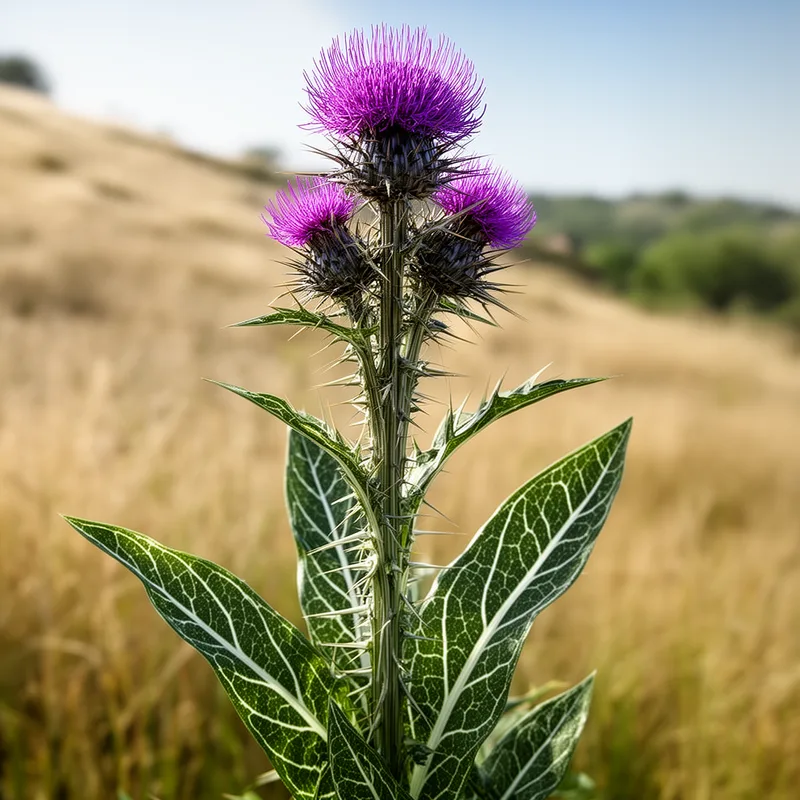
- The lady's thistle is recognizable by its striking white-veined leaves.
Examples
-
The lady's thistle is known for its striking purple flowers.
-
You can find lady's thistle growing wild along sunny hillsides in South America.
-
Gardeners in California sometimes cultivate lady's thistle for its ornamental value.
-
I spotted a lady's thistle growing near the trail.
-
Gardeners in California sometimes cultivate lady's thistle for its ornamental value.
-
You can find lady's thistle growing wild along sunny hillsides in South America.
-
The lady's thistle is recognizable by its striking white-veined leaves.
Synonyms

 1
5.0
1
5.0

A tall prickly plant with purple flowers and white spots on leaves used in herbal medicine to help the liver


 1
9.9
1
9.9
A tall plant with spiky leaves, white marks, and purple flower heads used in herbal medicine
A tall plant with large green leaves with white patches and purple flowers

A tall thistle from the Mediterranean that has purple flower heads, leaves with white marks, and is called milk thistle
How Tall

Surface Forms
Morphology
lady's + thistle
The phrase names a particular kind of thistle (a plant) formed by a possessive modifier 'lady's' + the noun 'thistle', so a B1 learner who knows 'lady' and 'thistle' can infer it refers to a type of thistle. This possessive N+N naming pattern is common cross-linguistically and follows regular compositional semantics, making the expression transparent.
Etymology
Lady's thistle may come from a simple picture: people long ago called the Virgin Mary 'Our Lady', and the plant's pale, white-marked leaves looked like a light cloak on a lady, so the thistle was called 'lady's thistle'. So today lady's thistle is the common name for this tall thistle with white-blotched leaves.