
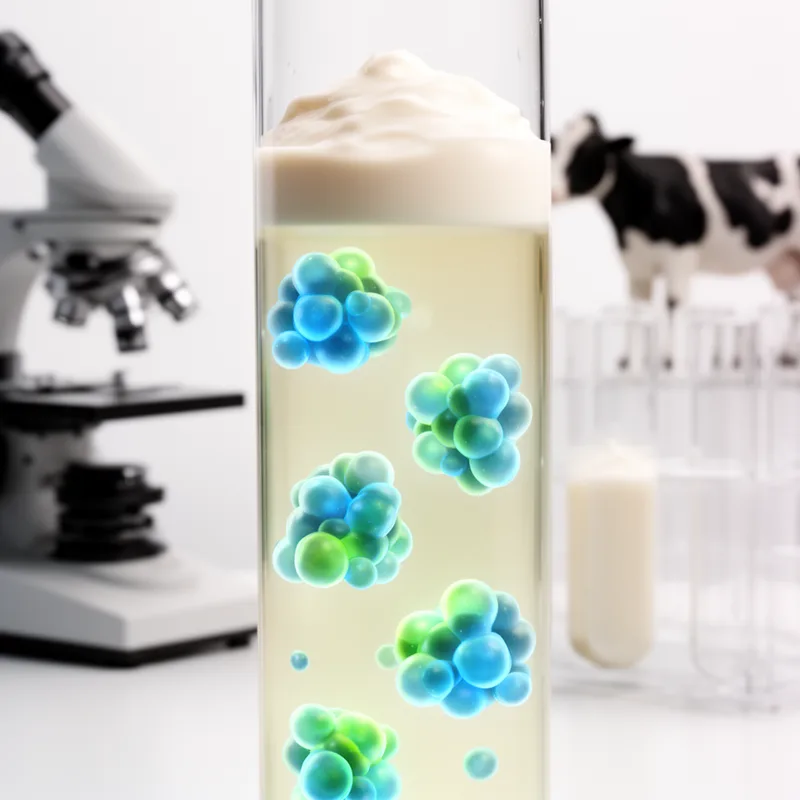
lactoglobulin


 1
9.9
A protein in the watery part of milk, especially cow's milk
- noun
- /ˌlæktəˈɡloʊbjuːlɪn/
- Specialized
:
lactoglobulina
- Recently, researchers in New Zealand announced the creation of a cow that produces milk that does not contain a protein called beta-lactoglobulin.
Examples
-
The most abundant one by far is lactoglobulin, whose biological function remains a mystery.
-
Recently, researchers in New Zealand announced the creation of a cow that produces milk that does not contain a protein called beta-lactoglobulin.
Blog text (16) -
Most of the differences between cow and human milk do not cause problems for people who consume it, but lactoglobulin, which is found in milk from cows and other ruminants, is a major cause of allergic reactions.
Surface Forms
lactoglobulin singular
lactoglobulins plural
Morphology
Etymology
Lactoglobulin breaks into lacto- meaning 'milk' and globulin from 'globule' meaning 'small ball' with -in showing it is a protein. So, lactoglobulin is a small, round protein in the watery part of milk, which is why the name means a 'milk' protein.