
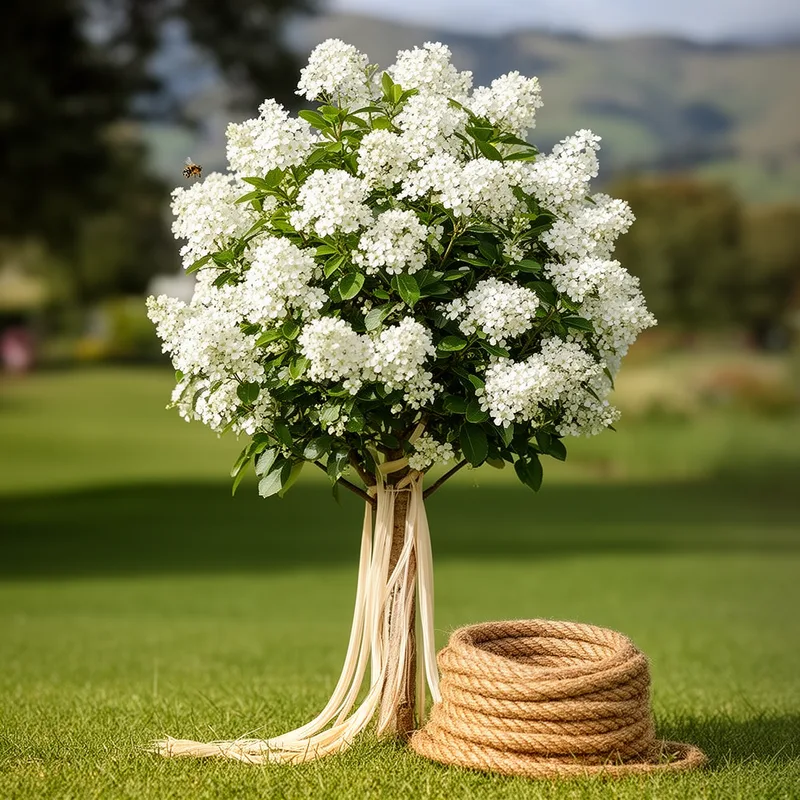
lacebark
- noun
- New Zealand
- lacebark elm
Examples
-
Pathfinder is a lacebark elm with a single trunk and has both high insect and disease resistance.
Academic text (1996) -
Frontier was developed by crossing the lacebark elm, Ulmus parvifolia, with a European species.
Academic text (1996) -
Dynasty is a lacebark elm of Korean parentage that was released by Santamour because of its smaller stature and potential use under power lines along city streets.
Academic text (1996) -
Ohio is a lacebark elm selection that is moderately V-shaped, with excellent resistance to the elm leaf beetle and Dutch elm disease.
Academic text (1996) -
The lacebark tree produces clusters of honey-scented white flowers that attract many pollinators.
-
In traditional Maori culture, the bark of the lacebark is used to make strong cordage.
-
New Zealand gardens often feature the lacebark for its beautiful blooms and sweet fragrance.
Synonyms
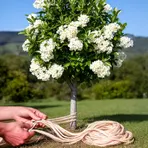
A small New Zealand tree with fragrant clusters of white flowers and bark used to make rope

A small New Zealand tree with clusters of white flowers that smell like honey and bark used for making rope
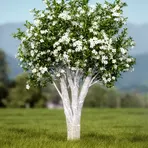
A small tree or bush from New Zealand with white flowers and bark like lace

A New Zealand tree with strong bark that people use to make cord and that has small white fragrant flowers
Surface Forms
Morphology
Etymology
Lacebark comes from the English words lace and bark, because the tree's bark peels into thin, net-like fibres like 'lace'. Early Māori used those fibres to make strong cords and ropes, so the name reminds us both of the bark's look and its practical use.

