
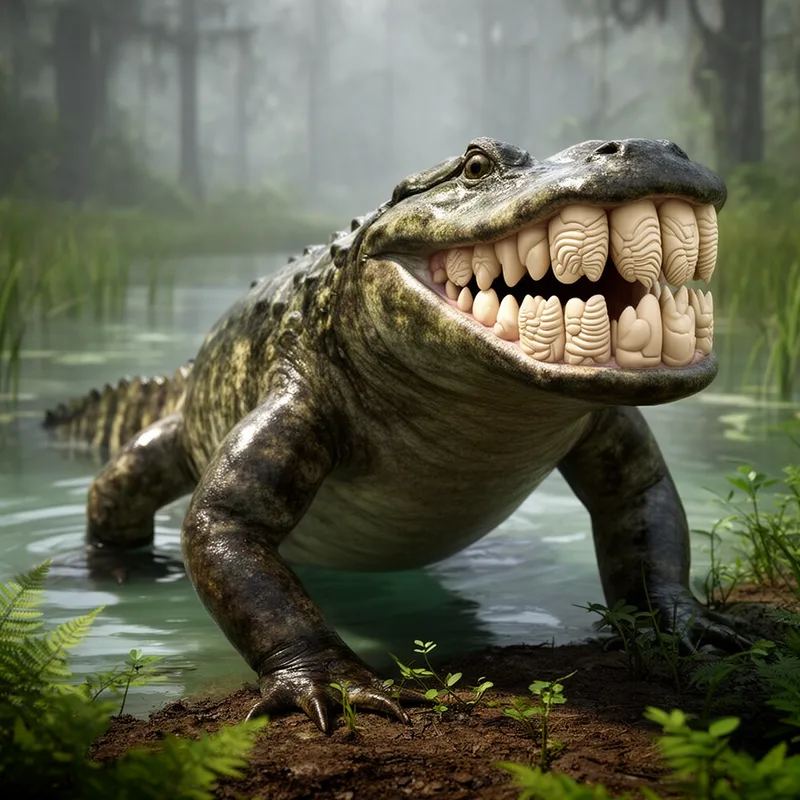
labyrinthodont
- noun
- /ˌlæbəˈrɪnθəˌdɒnt/
- Archaic
- A distinctive feature of every labyrinthodont is the intricate pattern within its teeth.
Examples
-
Scientists believe labyrinthodonts were among the earliest vertebrates to transition from water to land.
-
Many labyrinthodonts lived during the late Paleozoic era.
-
The fossilized remains of a labyrinthodont were discovered in the sedimentary layers of the valley.
-
The labyrinthodont was a fascinating creature from prehistoric times.
-
The fossilized remains of a labyrinthodont were discovered in the sedimentary layers of the valley.
-
Many labyrinthodonts lived during the late Paleozoic era.
-
Scientists believe labyrinthodonts were among the earliest vertebrates to transition from water to land.
Synonyms
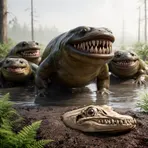
A group of large extinct amphibians with flat skulls and cone-shaped teeth with complex patterns

A group of large extinct amphibians with flat skulls and cone-shaped teeth that lived a very long time ago
Surface Forms
Morphology
Etymology
Labyrinthodont comes from Greek parts labyrinth ('maze') and odont ('tooth'), so it literally means 'maze-tooth'. This name fits because these ancient amphibians had teeth with complicated, folded patterns that look like a tiny maze.

