
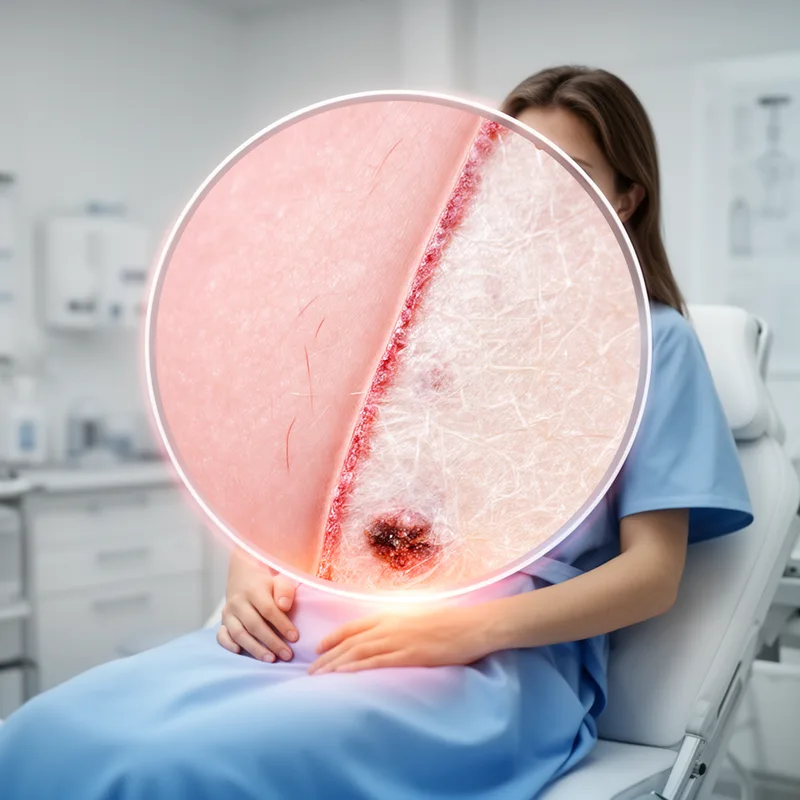
kraurosis vulvae
- noun
- /kraʊˈroʊsɪs ˈvʌlveɪ/
- Specialized
- Some studies suggest that kraurosis vulvae can be a precursor to certain vulvar cancers if left untreated.
Examples
-
The patient was diagnosed with kraurosis vulvae after presenting with itching and dryness.
-
Topical steroid creams are sometimes prescribed to manage the symptoms of kraurosis vulvae.
-
The diagnosis of kraurosis vulvae can be alarming for many women.
-
Doctors often recommend regular check-ups for kraurosis vulvae.
-
The doctor explained that kraurosis vulvae is a condition that can lead to changes in the vulva if not treated.
-
She learned that kraurosis vulvae could cause discomfort and requires ongoing medical attention.
-
After her examination, the specialist confirmed the presence of kraurosis vulvae and discussed potential treatment options.
Surface Forms
Morphology
kraurosis + vulvae
The phrase is fully compositional: 'kraurosis' denotes atrophy/shriveling of skin or mucous membranes and 'vulvae' refers to the vulva, so the combined meaning (‘atrophy of the vulva’) is directly derivable from the constituents. Although the term is medical and uses Latin morphology, its sense is predictable for a learner who knows both constituent meanings.
Etymology
Kraurosis vulvae comes from old Greek and Latin words: kraurosis from a Greek word meaning 'withered' or 'dry', and vulvae the Latin word for the 'outer female parts'. So the name creates the image of long-term drying and thinning of the vulva, which is why it refers to this condition that can become serious if not treated.

