
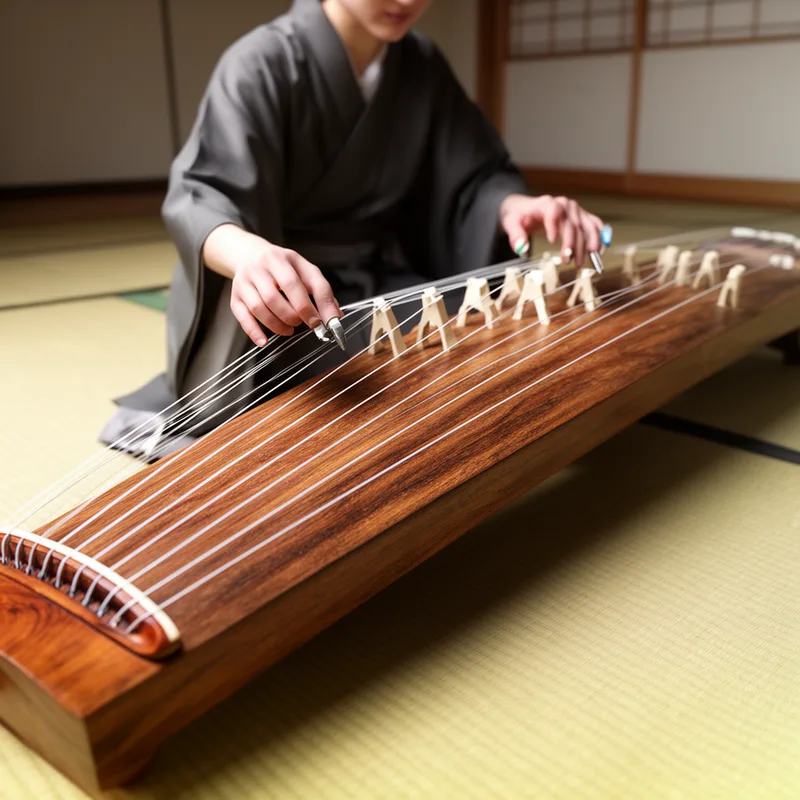
koto


 1
9.9
1
9.9
- noun
- /ˈkoʊtoʊ/
 :
koto
:
koto
- She learned to play the koto after discovering her grandmother's old instrument in the attic.
Examples
-
Why or why not? After conducting internet research about Brubeck's life and music, students learn about the koto and listen to recorded examples.
Academic text (2011) -
Then, the class listens to "Koto Song" and discusses how it reflects the sound of the koto.
Academic text (2011) -
[Five-tone koto; grandparents chuckle and thank him again, and bow again with another koto.]
-
[Five-tone koto; grandparents chuckle and thank him again, and bow again with another koto.]
-
[Grandpa and Grandma respond gratefully, and bow deeply with an elaborate koto arrangement.]
-
There's the peculiar but familiar twang of a koto, and then a shamisen being briskly plucked.
Fiction book (1996) -
The gentle sound of the koto filled the room, creating a serene atmosphere for the tea ceremony.
-
At the cultural festival, the beautiful melodies of the koto captivated the audience.
Compounds

Surface Forms
Etymology
Koto comes from Japanese and is the name for a traditional plucked string instrument. Think of it as a Japanese 'harp' or 'zither' that you play by plucking its strings, which is why the word means that long, flat instrument used in Japanese music.