
kolkhoz


 1
9.9
- noun
- /kɒlˈkhoʊz/
- Archaic
- The Sakhalin Kolkhoz helped SEASAFICO obtain a fishing catch quota in the Soviet 200-mile zone.
Examples
-
In order to lighten the work of the women, we've built laundromats in our kolkhoz and installed gas...
Fiction book (1996) -
In 1947, a fishing kolkhoz was founded in Mangalsala that merged two previous occupational institutions: the societies of the Mangali and Daugavgrīva fishermen.
Academic text (2016) -
The new director of the newly formed kolkhoz did not leave the position of cultural director vacant, as he had filled the others.
Fiction book (1996) -
"I'm off to work at the kolkhoz," her husband said, "amen," to conclude the breakfast and got up from his place.
Fiction book (1996) -
They had succeeded in establishing a farm in a district where the kolkhoz system was not very strict.
Fiction book (1993) -
The fish processing plant, established in the former kolkhoz territory, was ranked among the twelve largest air polluters of Riga in 2006.
Academic text (2016) -
The year that Meret Agha finished studying in the Culture Department at the technical school, the kolkhoz, which comprised several villages, was broken up, so that each village became a separate collective farm.
Fiction book (1996) -
Besides, the kolkhoz had developed a successful system of social benefits for its employees, including travel abroad and a rich cultural life of festivals and corporate parties, particularly warmly remembered by fishermen's wives.
Academic text (2016) -
In the 1970s, the membership of the kolkhoz had increased to 1,500 (Pintans 1978) and also absorbed other fishing communities located on the lower Daugava.
Academic text (2016) -
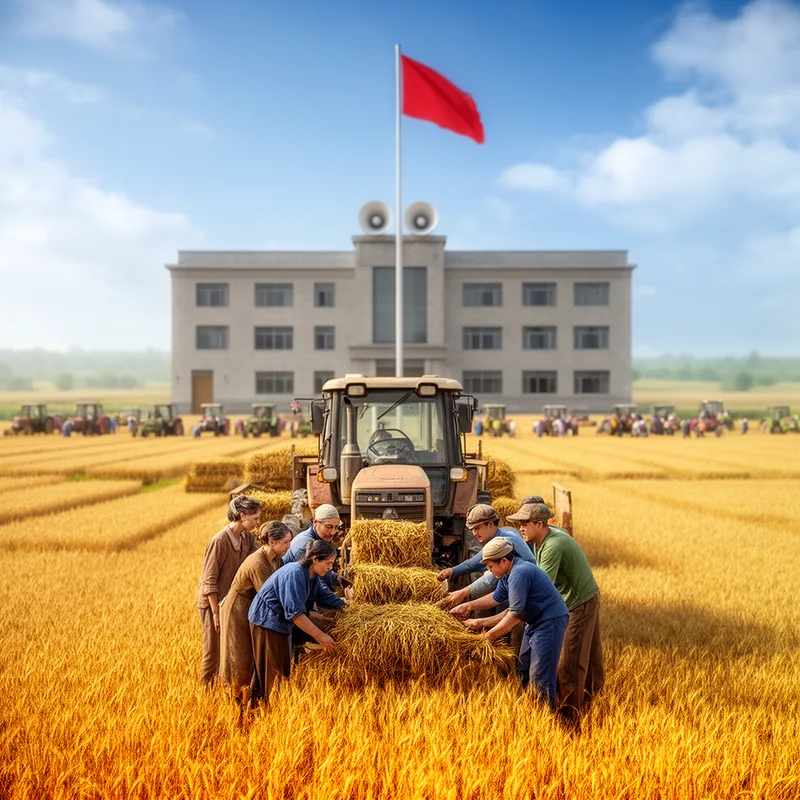
The workers at the kolkhoz gathered early in the morning to plant crops together.
Synonyms
 1
9.9
A large farm that the government owns and runs in the former Soviet Union
Surface Forms
Etymology
Kolkhoz comes from the Russian words kollektiv ('collective') and khoz ('farm' or 'economy'), and it literally means 'collective farm'. So a kolkhoz was a farm where people worked together, often run under state control in the Soviet Union.