

kine
 1
9.9
1
9.9

- noun
- /kaɪn/
- Archaic
- The Suba and Kine groups—who settled in this region before the Luo—were assimilated by the Luo immigrants through marriage, but also as a consequence of violent disputes.
Examples
-
I'm gonna sine your pitty on the runny kine.
-
They took after us, of course, and we led them on a canty chase uphill and through burns and over rocks and such; and all the while, the rest of Dougal's men were making off over the border with the kine.
Fiction book (1991) -
You "katonks" talk funny kine, ah?
-
...on the runny...kine.
-
Kine & Einy started designing 3D eyewear while still in college.
Blog text (11) -
Baby... ...I'm gonna sine your pitty on the runny kine.
-
While it may not seem like traditional Criterion fare, an edition of 'Pootie Tang' would absolutely sine my pitty on the runny kine.
Blog text (23) -
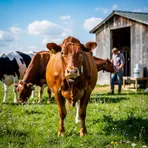
The farmer raised a herd of kine to provide milk for the community.
-
In ancient myths, the kine were often considered sacred animals.
-
On the open field, the kine grazed peacefully under the watchful eye of the herder.
Synonyms
 335
1.0
335
1.0
Large farm animals like cows and bulls that farmers keep for milk, meat, or work
 2
1.0
2
1.0
Animals kept on farms for milk or meat

Cows or cattle used especially in Scotland
Surface Forms
Etymology
The word kine is an old plural form of cow, meaning 'cows' or 'cattle' as a group. So when you see kine in older writing, it simply refers to several cows.